What Happens to Western Sahara After the UN Mission Ends?
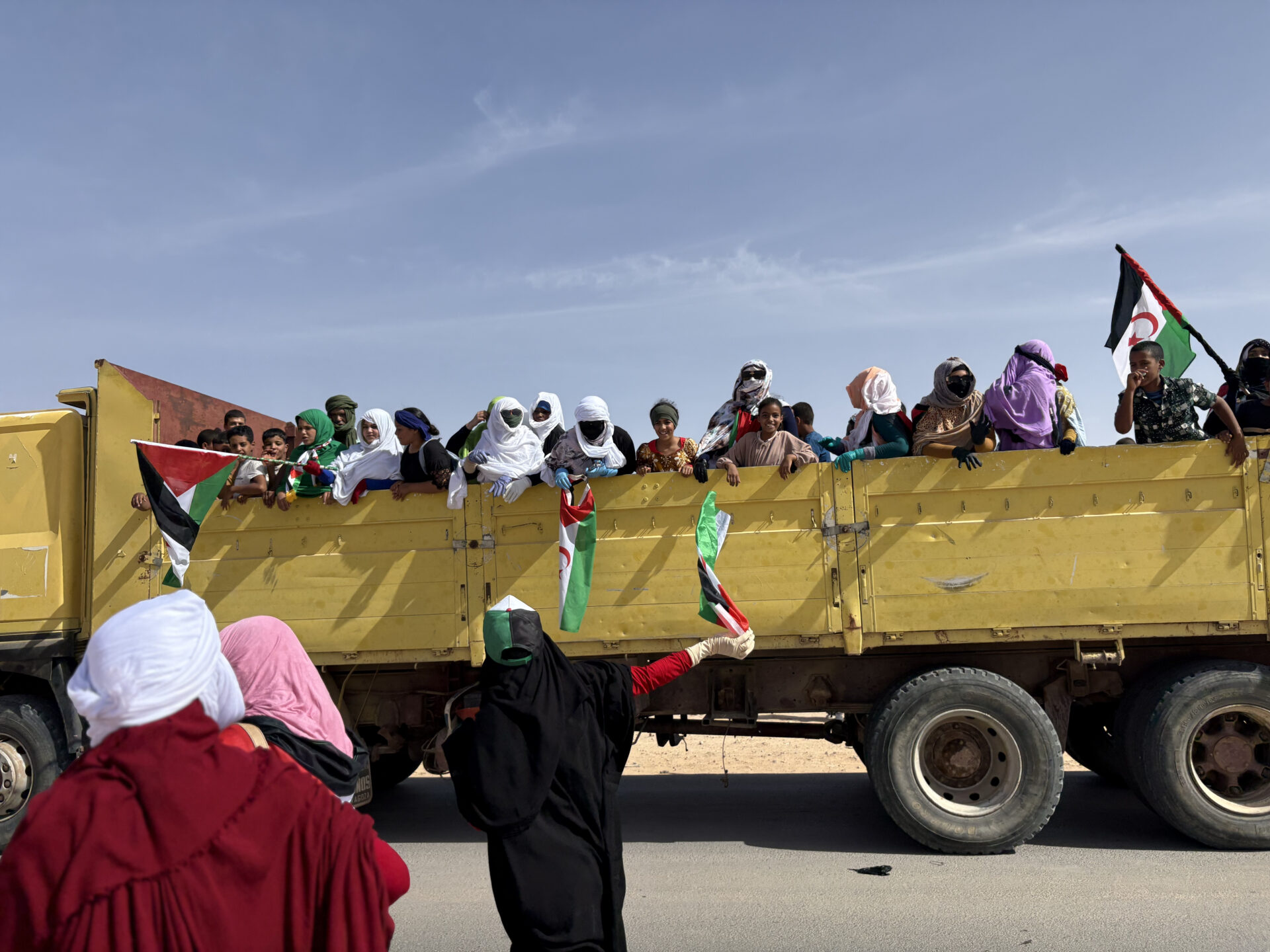
One of the United Nations’ longest-running peacekeeping missions abruptly ended last month after the UN Security Council (UNSC) rejected two competing draft resolutions from the US and Russia. Now, the future of Western Sahara, a former Spanish colony under Moroccan occupation since 1975, hangs in the balance. Some experts argue that it sets a “dangerous precedent” for other self-determination struggles around the world. The United Nations Mission for the Referendum in Western Sahara (MINURSO by its French acronym) was established in 1991 to maintain a ceasefire between Moroccan forces and the Polisario Front, a political-military movement that represents the indigenous Sahrawi people. Spain’s hasty withdrawal from its former colony in 1975 led to a 16-year war over the territory, which is rich in natural resources including phosphates used in fertilizer. The mission was also tasked with carrying out a referendum for self-determination for the Sahrawi people, and had been consistently renewed by the Security Council — until now. In its draft resolution, the US proposed renaming MINURSO and removing the referendum from its mandate, affirming that “genuine autonomy under Moroccan sovereignty is the only feasible solution to the question of Western Sahara.” The US representative to the UN, Mike Waltz, said the US would not lend its support to “a mission whose very name perpetuates something that cannot be done.” Russia vetoed this text, arguing that it marginalized the Polisario and went against UN parameters for self-determination. Russia proposed a one-year technical rollover which also failed to secure the Council’s support. The mission expired on Oct. 31 as a result. Sidi Omar, the Polisario’s UN representative, blames Morocco for the nearly 35-year impasse. “What prevented MINURSO from fulfilling its mandate is Morocco,” Omar told Inkstick. “Morocco did everything in their power to block the implementation of all the key elements of the agreement.” Morocco blames its longtime rival Algeria for “orchestrating” the conflict. Algeria backs the Polisario Front and hosts around 200,000 Sahrawi refugees along its southwestern border. In his remarks to the UN General Assembly following the MINURSO vote, Morocco’s UN ambassador Omar Hilale said “Whenever the Polisario said no, we heard Algeria’s voice behind it.” He added: “The deadlock lies neither in Rabat, which has honored all of its commitments, nor in New York, here, where it tried everything. The Sahara was Moroccan before the 30th of October. It is even more Moroccan after the 30th of October, and the Sahara will remain Moroccan until the end of time.” Over the last few years, Morocco has been successfully lobbying countries around the world to support its “autonomy plan” for Western Sahara. First proposed in 2007, the plan would give Sahrawis limited control of local affairs, while Rabat would retain jurisdiction over defense, foreign affairs and religious matters. The Polisario has always rejected this plan and pushed for a self-determination referendum that would give Sahrawis the choice of independence or integration with Morocco. But a referendum has never taken place. In the meantime, Moroccan in-migration has expanded, and Moroccans are estimated to make up the majority of the estimated 612,000 population. The Sahrawis have long maintained a nonviolent civil resistance movement in Western Sahara, in the thin strip of liberated territory, and in the refugee camps in neighboring Algeria, alongside the Polisario-led armed struggle. Meanwhile, Morocco has found an ally in the US, which, under President Donald Trump, became the first country to recognize Moroccan sovereignty over Western Sahara in 2020, just weeks after the collapse of the nearly 30-year ceasefire between Morocco and the Polisario. “The Trump administration’s position is that the US has a right to impose a solution,” says Stephen Zunes, professor of politics and international studies at the University of San Francisco, who has written extensively on Western Sahara. “This idea to impose a solution that bypasses a genuine act of self-determination really is a very dangerous precedent. It reminds me of the US role in the so-called peace process in Israel-Palestine ... which [ignores] the gross asymmetry in power between the occupier and the occupied, not to mention the fact international law clearly favoured one side over the other.” Omar says the US support and UNSC endorsement of Morocco’s territorial expansionist ambitions could have “destabilizing repercussions not only in our region but beyond.” In addition to the US, two other countries have also recognized Moroccan sovereignty over the territory: Israel, as part of a Trump-brokered deal to normalize ties between Israel and various Arab states, and Colombia, whose far-right president Abelardo de la Espriella made the announcement and froze ties with the Polisario just days after his swearing in in August. “The fact that these far-right governments are the ones that are really backing Morocco to me sends the message that this really is part of an effort to undermine the post World War II international liberal order,” says Zunes. “They don’t even pretend it exists.” Omar also highlights that France and the United Kingdom both voted in favor of the US resolution. “When the time came for them to support [Russia’s] draft resolution, they failed to support that, which exposes what I would call hypocrisy,” he said. MINURSO is the only modern UN peacekeeping force that doesn’t have a human rights monitoring mandate . Freedom House ranks Western Sahara among the lowest in the world for civil liberties. Sahrawi activists face forced disappearances , arbitrary arrests , surveillance, restrictions on freedom of movement and criminal proceedings. Morocco also maintains a total media blockade in the territory and international journalists are regularly denied entry. Human rights abuses have also been documented in the Polisario-run refugee camps in neighboring Algeria, but to a far lesser extent . The refugee camps are also known as the Sahrawi Arab Democratic Republic, the Polisario’s official state in exile. Massive demonstrations in the camps in the lead up to the Oct. 30 vote culminated with a joint letter by Sahrawi and international civil society to the UNSC calling on member states to refrain from supporting a resolution that would deny Sahrawis their right to self determination. “Our future must be decided by us through a genuine, uncoerced exercise of self-determination, not dictated from distant offices by actors who will never bear the consequences of their decision,” said Sahrawi women’s rights activist Najla Mohamed Lamin, at a protest in the Smara refugee camp on Oct. 28, where thousands gathered to demand their rights to self-determination. “How can anyone claim to know what is best for our children, our communities, and our nation while denying us the right to speak and decide for ourselves?” Following the vote on Oct. 30, Oxfam warned that the failure to extend MINURSO was “a significant setback for the Sahrawis” and that “After five decades of displacement, Sahrawi resilience must never become an excuse for international inaction, or for them to be asked to surrender their rights.” The charity urged the international community to provide adequate humanitarian funding for the camp population, which already suffers from high levels of malnutrition and food scarcity. Morocco has been celebrating the withdrawal of the mission which King Mohammed VI called “a significant step toward the definitive closure of the Moroccan Sahara issue at the United Nations.” The king’s statement said that Morocco remained “firmly committed to the ceasefire” established in 1991, although fighting has recommenced since 2020. The vote coincided with Moroccan Unity Day, which was established in 2025 after the UNSC passed a US-led resolution to use Morocco’s autonomy plan as the sole basis for further negotiations. Mohamed Mayara, an independent journalist in the capital Laayoune described tensions as Moroccans celebrate en masse with flags while Sahrawis are “intimidated, harassed and under constant surveillance.” The full withdrawal of the more than 500 MINURSO personnel is expected to take some months, due to the logistics and terms of closing various sites. A smaller team reporting to the United Nations Department of Operational Support has been tasked with overseeing the logistics of the drawdown. In a statement , outgoing UN Secretary General António Guterres emphasized that “the departure of MINURSO does not abrogate these inalienable rights and calls upon all parties to respect and promote the rights of the people of Western Sahara.” But Omar remains concerned following the full withdrawal, and the uncertainty surrounding the position of the new Secretary General, who will be elected to a new five-year term later this year. “We hope that the other side [Morocco] will respect the status quo and maintain it, because any sudden change of the status quo would definitely lead to further tension and perhaps even military escalation,” he said, adding that “without a UN presence, the occupying power can deploy all its means and repressive measures against the Sahrawi people without anybody even seeing or knowing about them.” On Nov. 10, the Polisario declared a “general mobilization” in response to “escalating Moroccan military movements” along the border wall which separates the occupied territory from the Polisario-controlled area. It called Morocco’s movements a “dangerous escalation inconsistent with its declared commitment to the ceasefire” and called on all Sahrawi men and women to “remain fully prepared to confront any threats and defend their people’s right to freedom, self-determination and independence.” Zunes says the “abuse of the veto power” within the Security Council, whose five permanent members are victors of World War II, gives him little faith in the diplomatic process. When asked about possible alternatives, he says sanctions could be imposed on Morocco or trade deals suspended until the Kingdom agrees to a fair and free referendum in Western Sahara. This is unlikely, however, given the economic opportunities ahead of the 2030 World Cup in Morocco, as well as investment opportunities in renewable energy . Zunes cites the success of similar actions in ending the Indonesian occupation of East Timor, and the apartheid regime in South Africa. “Something will happen that will get the world’s attention and get more people engaged,” he says. Meanwhile, Omar’s message is one of steadfast defiance: “All major transformation in this world actually did happen because of the people .... When you are stripped of your dignity, your land, the land of your ancestors, and even a chance to express yourself, you’re left with nothing, but to continue to struggle and to resist.” Author bio Maxine Betteridge-Moes Maxine Betteridge-Moes is a London-based journalist and editor covering global justice and human rights. She is also the founder of Counterpart Media, which is a new YouTube series about underreported crises and the people living through them. Donate YOU MADE IT THIS FAR. You’re exactly why Inkstick exists. Independent reporting on war and power shouldn’t belong to billionaires or governments. It survives because readers like you decide it matters. Help keep this reporting independent, free, and accessible to everyone. Join the people paying attention