The sky is falling... Look up tonight
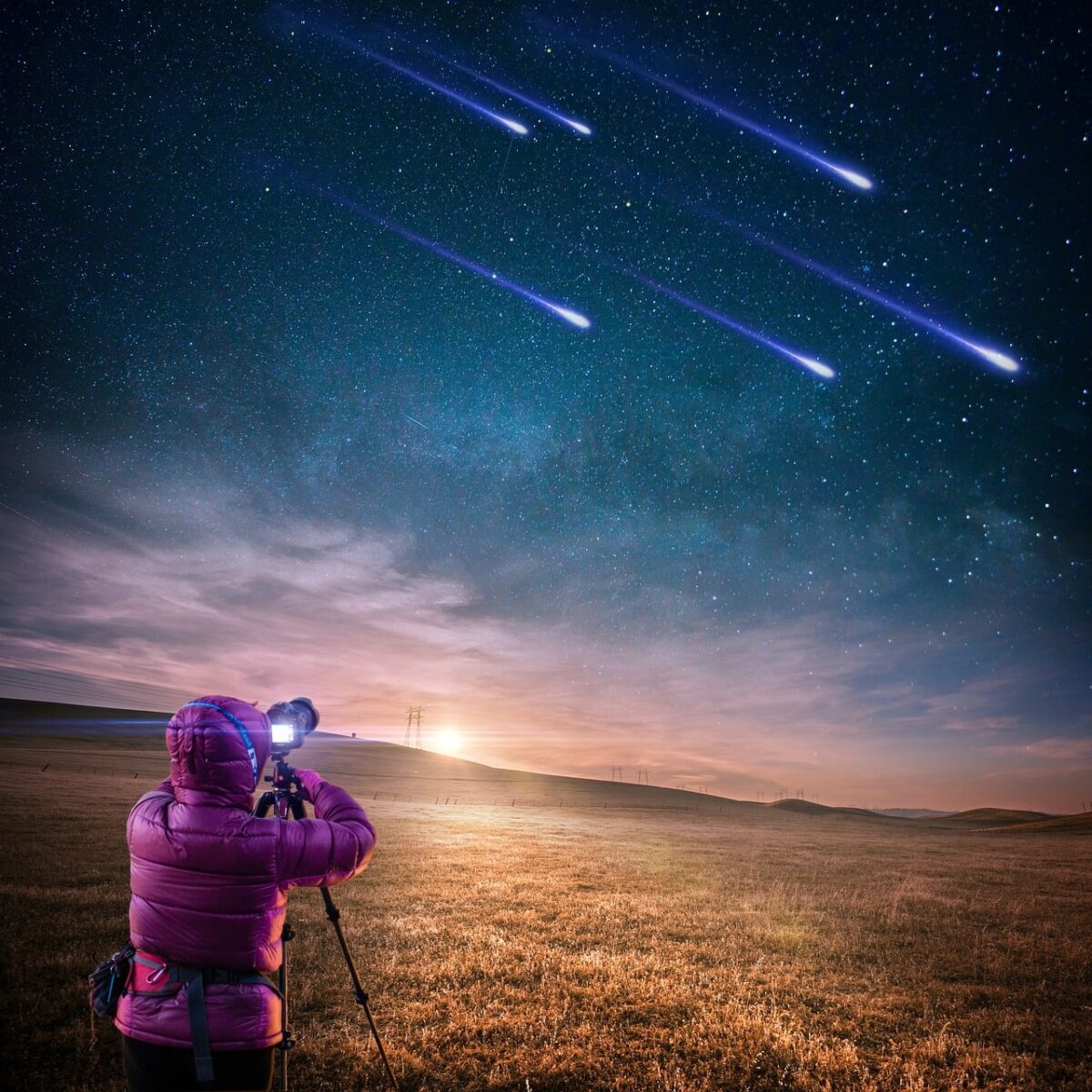
Jonathan Crouse November 17 , 2026 8 : 28 am Last Updated on November 17, 2026 8:28 am I love watching falling stars and tonight into tomorrow morning is a great time to look up at what was once feared as the end of the world. In the 1800’s an event now known as the Leonid meteor shower had people convinced that the world was ending and the sky was falling. Tonight into tomorrow morning we will see this year’s peak of that event. Here are all the details: When to watch: The midnight to dawn hours — on the mornings of November 17 and November 18 — are likely best. And this year, near the radiant point of the Leonids meteor shower, you’ll spot Jupiter and Mars, separated by only about two full-moon widths. Radiant: Rises around midnight, highest in the sky at dawn. You’ll see more meteors after the radiant has come over the eastern horizon. Do you need to look at the radiant to see the meteors? No. The meteors will fly from that single point in the sky, but they’ll appear all over the sky. Nearest moon phase: In 2026, the 1st quarter moon falls at 11:48 UTC on November 17. A 1st quarter moon sets around midnight. So the moon won’t interfere with the Leonids in 2026. Expected meteors at peak, under ideal conditions: Under a dark sky with no moon, you might see 10 to 15 Leonid meteors per hour. Leonid meteor shower: All you need to know in 2026 I know that the weather forecast is often not completely accurate, so maybe take this with a grain of salt, haha. Here is the prediction for some of the Leonid meteor shower highlights coming up: -1 °C | °F L: -1 ° H: 0 ° Feels like -5 °C | °F ° clear sky 2 °C | °F L: -1 ° H: 2 ° Feels like -1 °C | °F ° clear sky 1 °C | °F L: 1 ° H: 3 ° Feels like -2 °C | °F ° clear sky 3 °C | °F L: 3 ° H: 3 ° Feels like -1 °C | °F ° clear sky 2 °C | °F L: 2 ° H: 2 ° Feels like -1 °C | °F ° clear sky 2 °C | °F L: 2 ° H: 2 ° Feels like -2 °C | °F ° few clouds -0 °C | °F L: -0 ° H: -0 ° Feels like -3 °C | °F ° overcast clouds What’s Trending