Study Identifies Over 116,000 Gut Viruses Linked to Bacteria and IBS
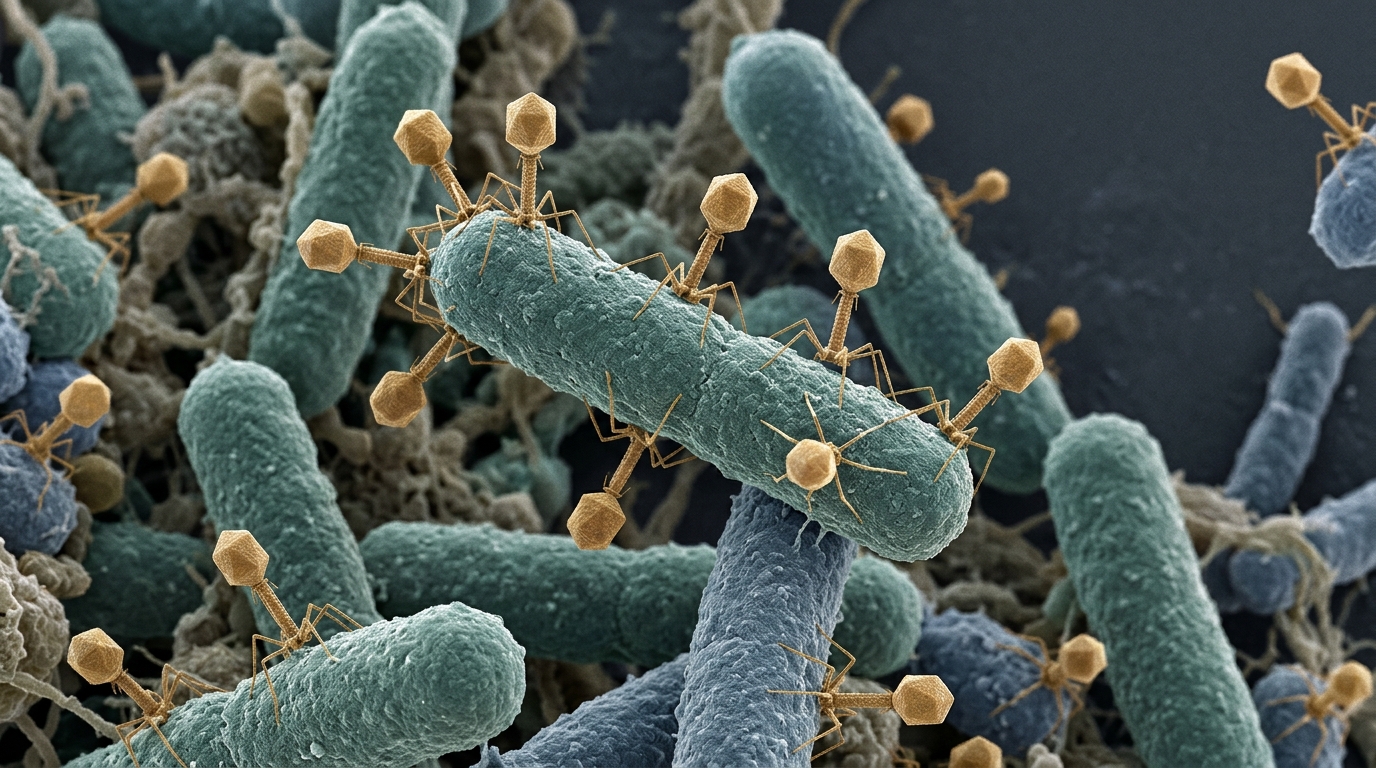
Scientists from King’s College London, Helmholtz Munich, and the University of Nottingham have identified more than 116,000 viral groups within the human gut microbiome, with over 99 percent of these entities lacking any close match in existing genomic catalogues. Published in Nature Communications, the observational study maps an expansive community of bacteriophages—viruses that infect bacteria—providing an integrated view of how viral populations, bacterial communities, and metabolic components interact inside the digestive system. While investigations of the human gut have traditionally focused on bacteria, these findings establish that the viral fraction represents a vast, largely unexplored dimension of the gut ecosystem that closely tracks bacterial composition and host health. To map this viral landscape, the research team analyzed genetic material extracted from stool samples provided by more than 1,000 participants enrolled in TwinsUK, the largest twin registry in the United Kingdom containing comprehensive data on gut bacteria, health measurements, and diet. By profiling the co-occurrence and varying relative abundance of viruses and bacteria within each individual, the investigators evaluated how specific viral groups align with distinct bacterial hosts. Their analysis demonstrated that certain bacteriophages were consistently more prevalent alongside particular bacteria, whereas other viral groups exhibited inverse relationships and were systematically less common in those same bacterial environments. By comparing patterns across twin pairs, the researchers investigated the relative contributions of inherited genetics and external exposures in shaping the viral architecture of the gut. Genetic factors were estimated to account for approximately 47 percent of the variation observed in overall viral diversity across the cohort. However, the study established that environmental factors play a predominant role in shaping the broader viral community, with the abundance and composition of most individual viral populations governed primarily by external influences rather than host heredity. Beyond cataloguing overall viral diversity, the investigators identified a specific subgroup of bacteriophages carrying genetic sequences linked to harmful bacterial behaviour. These particular viruses occurred more frequently alongside bacteria capable of causing infections, while simultaneously appearing less frequently alongside beneficial bacterial species responsible for breaking down dietary fibre. Although the authors emphasized that the presence of these bacteriophages does not demonstrate that the viruses directly cause disease, the observed associations indicate that specific viral groups track closely with less favourable microbial configurations in the gastrointestinal tract. In a second study published in the journal Gut, the research team extended their viral profiling to explore potential associations with irritable bowel syndrome, a condition affecting approximately 10 percent of the global population whose underlying causes remain poorly understood. Utilizing data from the TwinsUK cohort, the investigators identified 50 specific gut viral groups associated with the condition. Most of these identified viral groups were found to be significantly less abundant in individuals diagnosed with irritable bowel syndrome compared to unaffected participants. The companion investigation also revealed substantial alterations in the relational patterns connecting viruses and their bacterial hosts among individuals with irritable bowel syndrome. These findings suggest that irritable bowel syndrome may involve widespread structural changes across the organisation of the wider gut microbial community, rather than isolated changes occurring within bacterial populations alone. Dr. Panayiotis Louca, a Research Associate at King’s College London who led the Nature study, noted the technical challenges inherent in examining this component of the microbiome. “Gut viruses are difficult to study, so most of what we found simply isn’t in existing catalogues,” Dr. Louca stated. “What stands out is how closely they track with gut bacteria and with the chemicals those bacteria produce. We can’t yet say whether the viruses are driving that, and testing it is our next step.” The researchers noted that clarifying whether viruses actively influence bacterial metabolism represents an essential target for future investigations. Senior author Dr. Cristina Menni, who leads the metabolomics research group at the Department of Twin Research, Ageing and Genomic Epidemiology at King’s College London, highlighted the biological significance of integrating viral, bacterial, and metabolic data. “Our research highlights that to fully understand the gut microbiome and its links to health and disease, we need to look beyond bacteria and consider the viruses that live alongside them,” Dr. Menni explained. “We reveal a fascinating and largely unexplored dimension of the gut microbiome – discovering that viruses are not only closely associated with bacterial communities, but also with the metabolites that connect the microbiome to our health. This opens exciting new avenues for understanding how the gut ecosystem works.” Despite the depth of the genomic cataloguing, the authors emphasized critical limitations regarding the study design and participant demographics. Because the research relied on observational data, it cannot establish whether bacteriophages cause observed physiological effects or whether they merely reflect prevailing microbial dynamics. Furthermore, Dr. Louca pointed out that the findings should be replicated in more diverse populations, noting that the TwinsUK cohort analyzed in these studies consisted predominantly of older women of European ancestry. Reflecting on the analytical advances enabling this discovery, Professor Ana Valdes and Dr. Afroditi Kouraki from the University of Nottingham remarked: “For a long time the viral part of the gut microbiome has been a kind of dark matter: we knew it was there but couldn’t see it. Advances in sequencing and computational methods mean we can now start to map it properly, and this study shows just how much has been hidden.” The researchers anticipate that ongoing work will clarify how viral-bacterial relationships change across states of health and disease, potentially aiding research into diagnostic biomarkers and personalized approaches to gut health. The research was funded by the Chronic Disease Research Foundation, with additional partial support from Wellcome and the Medical Research Council. Subject of Research: Characterization of human gut bacteriophages and their associations with bacterial communities and irritable bowel syndrome Article Title: Viruses identified in the microbiome – which could influence conditions like IBS Article References: Viruses identified in the microbiome – which could influence conditions like IBS. Original publication (Bibliographic details unavailable.) Image Credits: AI Generated DOI: Not provided Keywords: gut microbiome, bacteriophages, gut viruses, irritable bowel syndrome, TwinsUK, Nature Communications, King's College London, Helmholtz Munich, University of Nottingham, bacterial communities, viral diversity, metabolomics, stool samples, dietary fibre breakdown, environmental factors, genetic variation, biomarkers, observational study