Service delivery and safety fears drag down Durban business confidence
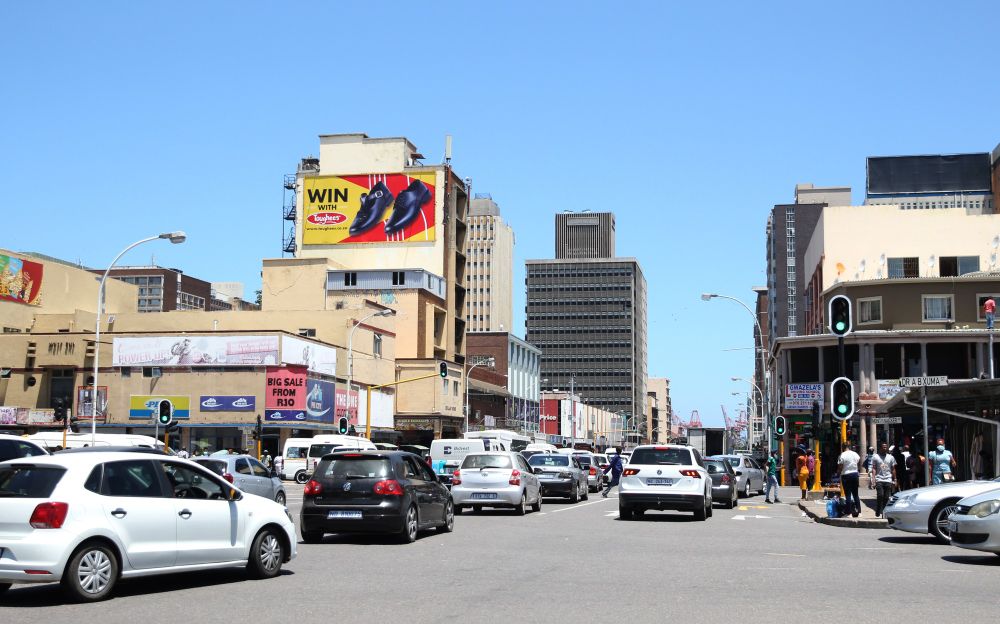
DBCI Xolani Dlamini | Published 30 minutes ago Durban’s business confidence index fell to 47.97 points in the third quarter of 2026, with executives citing public safety, service delivery and election uncertainty as concerns. According to the Durban Business Confidence Index (DBCI) released on November 16, compiled by the University of KwaZulu-Natal’s Macroeconomics Research Unit (MRU), the index fell by 3.57% to 1.74% in quarter 3 2026 Score index points. This follows a drop to 48.82 points in the second quarter, when sentiment breached the neutral 50-point mark for the first time since 2024. The index is recorded at 47.97 points in the quarter under review, which is 7.96% below the same quarter in 2025. It continues to stand significantly below the neutral (50 index points) zone. Produced in partnership with the Durban Chamber of Commerce and Industry and eThekwini Municipality, the DBCI measures business sentiment on a scale of 0 to 100. Any score below 50 indicates that a majority of surveyed executives hold a negative view of current and near-term operating conditions. UKZN Researchers Professor Harold Ngwala and Dr Ntokozo Nzimande, said that overall business confidence in Durban continued to decline. "Although this decline is largely explained by deteriorating global economic conditions, the re of local conditions cannot be overstated. Recently, Durban has been affected by illegal immigration protests, which have become violent. “The fear of looting and public safety in general poses a significant threat to potential investors. Moreover, uncertainties leading up to local government elections may have also fuelled investors' fears," said Ngwala. According to Ngwala, the construction sector registered a non-negligible decline in confidence. The confidence in this sector was 39.27 in 2026 quarter 2, decreasing to 23.54 in the quarter under review. The decline in confidence in the electricity, gas and water supply sector dwarfs that of the construction sector. It shrank from 55.87 points in the previous quarter to 29.76 points representing a 46.73% Q-o-Q deterioration. Other sectors including financial intermediation, insurance, real estate and business service as well as transport, storage and communication, also recorded non-trivial declines in business confidence as they declined by 19.55% in 2026 quarter 3 compared to previous quarter. Nzimande said the overall Durban BCI would have been worse without the sectors that registered tangible gains. The community, social and personal services sector gained a 27.51% increase in confidence in 2026 quarter 3 compared to quarter 2. "Despite its decade-long decline as a share of GDP, the manufacturing sector recorded a 9.49% increase in confidence, suggesting that authorities should strive to foster a conductive climate for this sector. The agriculture, hunting, forestry and fishing industry also reported positive gains, with confidence increasing by 8 4% Q-o-Q ", said Nzimande. However, researchers mentioned that year-on-year, business confidence in the industry declined by 16.34%, indicating that operating conditions are worse in 2026 than 2025. Elaborating on the 2026 quarter 3 survey of business opinion in Durban, researchers said perceptions of service delivery improved for the second conservative quarter. "The proportion of respondents who reported that if they or anyone complained about poor service delivery, it is unlikely that the local municipality would address it within a reasonable time frame dropped to 69.6% in 2026 quarter 3 from 71.2% in 2026 quarter 2. “In the 2026 quarter 3 survey, the largest proportion of the respondents (33.9%) cited water supply as the worst service provided, followed by public safety (police, fire, and ambulance) (30.4%), roads (21.4%), and environmental management (sewerage, solid waste, and parks) (14.3%) in that order,” said Nzimande. Commenting on the 2026 quarter 3 survey of business opinion in Durban, Nzimande said 69.6% of respondents reported expecting inflation to increase in the fourth quarter of the year. "These sentiments are enough to put pressure on the monetary authorities to act, lest inflation expectations become unanchored from the new target, subsequently eroding the SARB's credibility," said Nzimande. sundaytribune.co.za