SA looks to China, Africa to diversify exports amid changing global trade environment
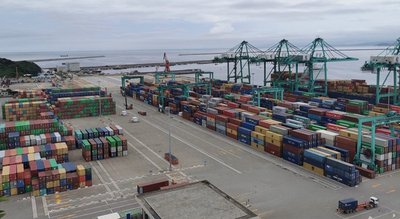
South Africa is seeking to expand its trade with China and increase the use of the African Continental Free Trade Area (AfCFTA) as it looks to diversify export markets amid growing uncertainty in the global trading environment. Photo:Twitter/CE_ChinaEconomy The Department of Trade, Industry and Competition (DTIC) told Parliament’s Portfolio Committee on Trade, Industry and Competition, on Tuesday, that South African exports to China had increased by almost 24% between May and August 2026, following the introduction of zero-tariff access for South African products. The arrangement took effect on 1 May and provides a two-year period of zero-tariff access while the two countries negotiate an early harvest agreement. The department's ambassador for trade, Ambassador for Trade Xolelwa Mlumbi-Peter, said the increase demonstrated the potential of the Chinese market to support South African exporters. "We have seen growth in our exports by 24% year-on-year, if we look at May to August 2026." Agricultural exports increased by more than 35% to nearly 500 million US dollars, while non-mineral exports grew by 21%. Automotive exports recorded an increase of 104%, although this was from a low base. Exports of chemicals rose by 63 percent, while mechanical and electrical products increased by 36%. Mlumbi-Peter said the two countries were negotiating an early harvest agreement to establish the basis for a broader trade arrangement. "The zero duty tariff access is for two years to allow for the negotiation of arrangements, a trade agreement with China." She added that South Africa wanted to ensure that the negotiations protected vulnerable domestic industries. "We are negotiating with China an early harvest agreement that, again, will fundamentally ensure that we don't open up sectors that are sensitive to South Africa." The first round of negotiations was held in Beijing between 19 and 21 October, with another round expected in 2027. The department said the relationship remained significant, with South African exports to China valued at R222.3 billion in 2025. Imports from China amounted to R420.7 billion over the same period. Alongside efforts to strengthen trade with China, the DTIC is looking to improve the use of the AfCFTA, which is intended to create a single continental market for goods and services. Despite South Africa exporting R557 billion worth of goods to the rest of the continent, only R3.5 billion of those exports had taken place under AfCFTA preferences by the end of July 2026. Imports under the agreement amounted to R3 billion. Mlumbi-Peter said the value of trade taking place under the agreement remained modest compared with South Africa's overall exports to the continent. "Members would have seen that the total exports to the rest of the continent is 557 billion. However, only 3.5 billion is going through under AfCFTA terms." She attributed the limited uptake partly to exporters still becoming familiar with the preferences available under the agreement, as well as non-tariff barriers. The department said 25 countries were implementing their tariff commitments, while work continued to finalise the remaining 10 percent of tariff lines. This includes 7% of products classified as sensitive and three percent excluded from tariff concessions. Mlumbi-Peter said the department was working with traders to address barriers when they arose and was engaging countries that had not yet implemented their commitments. The DTIC also outlined the role of the Southern African Customs Union in supporting regional industrial development. A R5 billion regional fund, sourced from the common revenue pool, is intended to support cross-border infrastructure and industrial development. The automotive sector and green mineral beneficiation have been identified as priority value chains. Under the proposed automotive model, South Africa would serve as the regional production hub, while neighbouring countries would focus on manufacturing components. The department said this approach could strengthen regional manufacturing capacity and create opportunities for countries across the region to participate in supply chains. The Department said expanding trade with China and improving the implementation of AfCFTA were important parts of its broader strategy to diversify export destinations, increase value-added production and strengthen trade within Africa. However, the relatively small value of exports currently traded under AfCFTA highlights the challenge of translating the agreement's market-access opportunities into greater trade by South African businesses. ALSO READ Jacaranda FM MORE ON JACARANDA FM