Polestar Unveils "Formula 2030" Design Direction for Next-Gen EVs, Debuting First on 2027 Model
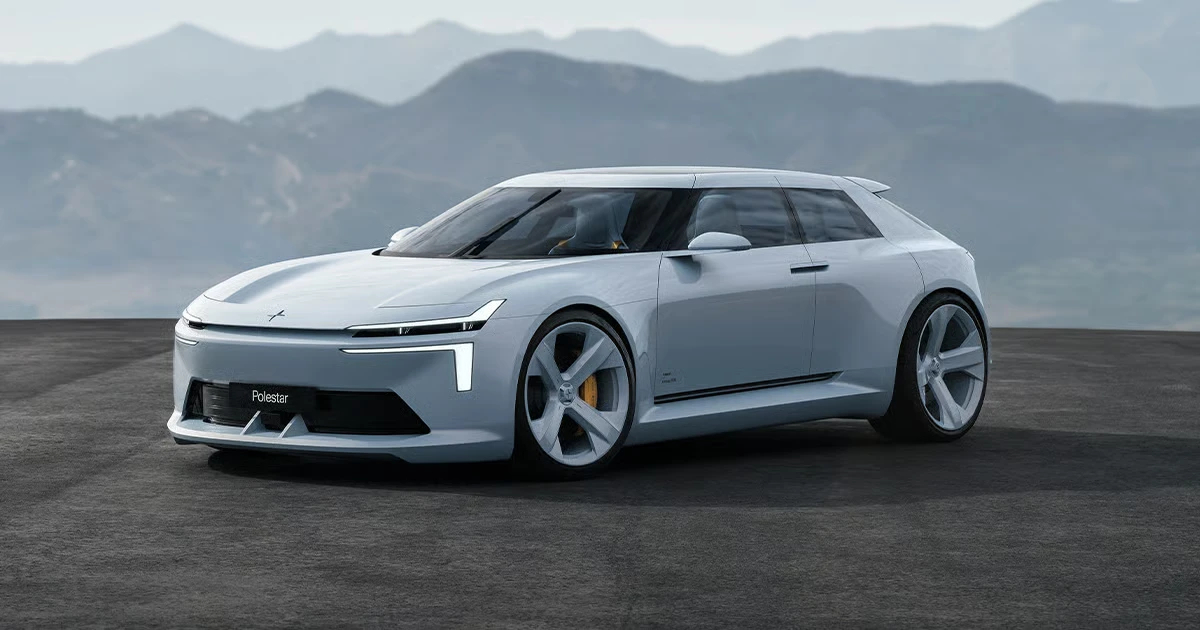
Swedish EV brand Polestar unveiled its "Formula 2030" concept car to the world on November 10, 2026. The design study is intended for adoption in the next-generation Polestar 2, due in 2027, and the Polestar 7, slated for 2028, with the front previewing the next Polestar 2 and the rear anticipating the Polestar 7. The low-slung body measures 4,680mm long and 1,350mm tall while offering four-door practicality, and features a curved 20-inch monitor, three driving modes, and customizable physical switches. It also pursues reduced environmental impact through materials such as recyclable interior components and natural-fiber composites. Swedish electric vehicle (EV) brand Polestar announced on November 10, 2026, the "Formula 2030" concept car, which signals the design and technology direction of its next-generation models. It is not merely a show car for display but a design study intended for adoption in the next-generation "Polestar 2," due in 2027, and the compact SUV "Polestar 7," slated for 2028. The name derives from the brand's management strategy, "Formula 2030." It is a single vehicle that gives concrete form to how the company will incorporate its three values—design, driving performance, and sustainability—into future production cars. Front Previews Next Polestar 2, Rear Anticipates Polestar 7 Body dimensions are 4,680mm long, 2,021mm wide, and 1,350mm tall, with a wheelbase of 2,780mm. Its height is lower than that of the grand tourer "Polestar 5," and in terms of size it sits between the Polestar 2 and Polestar 7. The combination of a low body with four-door practicality also shows the influence of the SUV "Polestar 4." On the exterior, the brand's identifying "dual-blade" headlights are integrated into the front aero wing. This design was inspired by the "Polestar 3" and previews the face of the next Polestar 2. Other distinctive features include a shark nose that protrudes from the front of the body and a deep front splitter connected to the body via a central pillar. The windshield, which wraps around like a helmet visor, is described as an homage to the original Polestar 2, and a single wiper evokes a racing car. The LiDAR is hidden beneath an aerodynamic cover when not in use and emerges when autonomous driving functions are in operation. At the rear, a new "single-blade" taillight replaces the horizontal light bar of previous models. The design was revealed ahead of its installation on production models and indicates the direction of the Polestar 7. The side view is defined by a long hood, a rearward-set cabin, and short overhangs, while flared rear fenders and 22-inch wheels convey a sense of power. Driver-Centric Cabin and Adjustable Positioning The interior thoroughly adheres to a driver-centric design. It features the "HyperDIM," a curved 20-inch driving information monitor mounted directly on the steering column, and a 12.2-inch center display integrated into a gently rising center tunnel. There are three driving modes: "Performance," "Normal," and "Autonomous." Sliding the selector on the center console forward switches between them, and the angle of the display and the driving position change in tandem. In the autonomous "Autonomous" mode, the center display remains upright and the distance between the seat and steering wheel increases. In "Performance" mode, the display lowers and integrates with the console surface, and the steering wheel and HyperDIM move closer to the driver's chest. The car also adopts steer-by-wire, which transmits steering input via electrical signals. Eight physical controls are arranged below the center display. Using rocker switches, rotary controllers, and other controls, the types of controls and the functions assigned to them can be customized. The aim is quick access to frequently used functions, marking a review of the recent trend of relying entirely on touch panels. The in-car system features Google built-in and Google Gemini, supporting voice operation through natural conversation. The seats are four independent seats, employing air-inflatable support sections and cushions. They change shape to match the occupant's body and support movement in the fore-aft and left-right directions. The doors have a pillarless structure that opens in opposing directions, making it easier to get in and out of each seat. The body color is an exclusive shade called "Nitrogen." It is a color whose appearance changes with natural light, and while the wheels, side cladding, and front and rear aerodynamic parts are all finished in related tones, differences in finish—gloss, matte, and satin—make each part stand out. Brembo brake calipers and seatbelts feature "Swedish Gold," which symbolizes the brand's performance. Reducing Environmental Impact Through Single-Material Construction and Natural-Fiber Composites On the materials front, based on a policy of promoting single-material construction, the door interiors are made entirely from recyclable components. The exposed seat frames and lateral structural members use galvanized steel with reduced environmental impact during manufacturing. The seatbacks use a composite combining European-grown flax and bio-based polypropylene. Opening the rear cargo area reveals body structure made from natural-fiber composites produced by Swiss composites manufacturer Bcomp, as well as race-derived Öhlins dampers. A front cargo area is also provided, securing dedicated space for a racing helmet and fire extinguisher. It is the first show car produced under the direction of Polestar design chief Philipp Römers, who explained to the effect that "Formula 2030 condenses into a single body what we are aiming for by 2030." Background and Impact Polestar's origins lie in motorsport. It has its roots in a racing team founded in Sweden in 1996 and developed as a brand handling Volvo's high-performance models. Volvo brought it under its wing in 2015, and in 2017 it relaunched as an independent electric performance car brand under Volvo and China's Geely Group. It currently offers the Polestar 2, 3, 4, and 5 in its lineup and is expanding globally as a premium EV brand combining Scandinavian minimalist design with advanced technology and driving performance. In the EV market, while numerical competition over range and charging performance intensifies, falling vehicle prices and sluggish demand are squeezing each company's profitability. Polestar is no exception, and how it expresses brand individuality and driving enjoyment will be key to avoiding being caught up in price competition. The design and control-system ideas shown in Formula 2030 are planned to be adopted first in the next Polestar 2 and then rolled out to the Polestar 7. Key specifications are as follows. Item Value/Specification Overall length 4,680mm Overall width 2,021mm Overall height 1,350mm Wheelbase 2,780mm Wheels 22-inch Driving information monitor Curved 20-inch "HyperDIM" Center display 12.2-inch Driving modes Performance/Normal/Autonomous Seats Four independent seats Note: Figures are based on Polestar's announcement. As for the timing of reflection in production cars, the next Polestar 2 is slated for 2027 and the Polestar 7 for 2028. Formula 2030 is strictly a design study, and the performance and pricing of the market version have not been disclosed at this time. Once added, BigGo Finance appears first in Google Search Top Stories, so you get the broadest, most up-to-the-minute, and most comprehensive global financial news first. Add preferred source