‘NAZA’ filmmaking team and mk2’s Fionnuala Jamison explain doc’s unorthodox distribution strategy
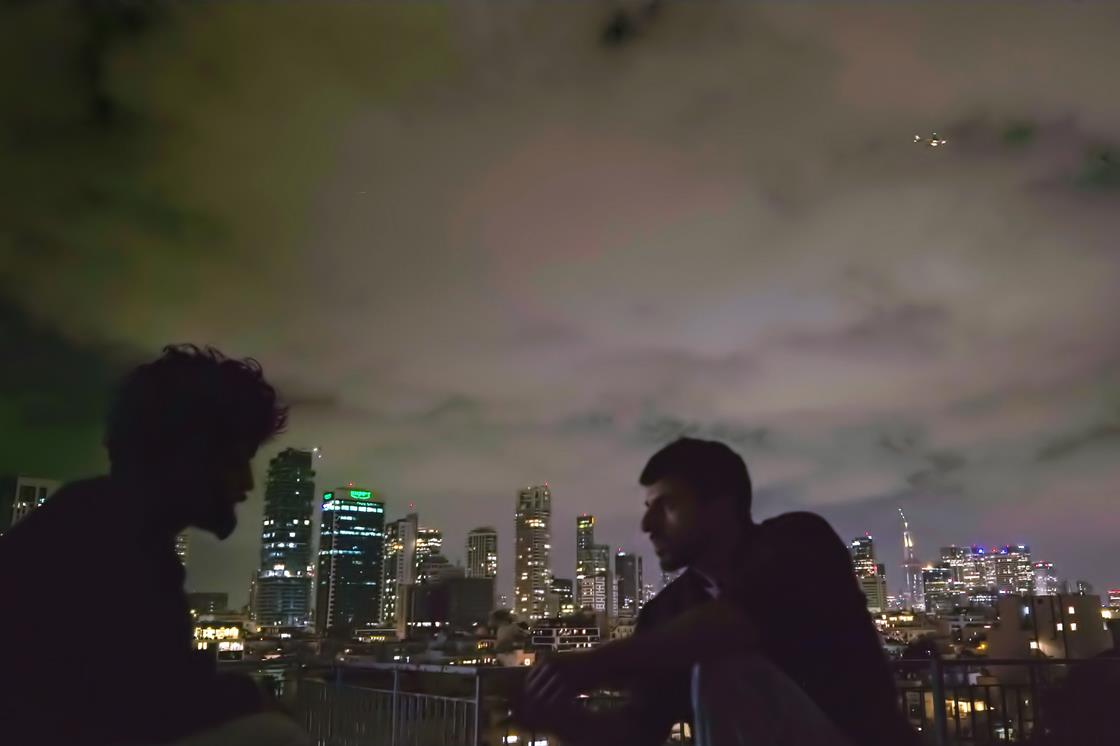
The filmmaking team behind documentary NAZA and managing director of sales agent mk2 Fionnuala Jamison have outlined the strategy behind the film’s unorthodox release, with a small window for a theatrical worldwide release ahead of streaming for free on The Guardian in early December. “In many ways, it didn’t make sense as a model,” the film’s producer, James Wilson, told an audience at the International Documentary Film Festival Amsterdam yesterday (November 16). NAZA world premiered at Venice and has garnered 1.6 million admissions from 47 territories to date, while still playing in many venues. It was released in October, with distributors including Dogwoof (UK-Ireland) Neon (North America), I Wonder (Italy) and Chery Pickers (Benelux). Italy and Benelux are the two highest-performing territories so far. NAZA is co-directed by Israeli filmmakers Yuval Abraham and Rachel Szor (who had previously both worked on No Other Land ) and was produced by the UK’s Lindsay Poulton and Harry Davies of The Guardian and James Wilson. The film shot at night on the rooftops of Tel Aviv and features interviews with Israeli operatives about their targeted massacres of civilians in Gaza. It is The Guardian ’s first feature-length documentary. “I believe in motley crews,” said Poulton. “I believe in coming together in different disciplines to do something different – that’s how you innovate and find different ways through things.” The Guardian producers and the co-directors were working on the film, with an edit already shot and a plan in place to release it as quickly as possible for free on The Guardian site before Wilson boarded in April 2025. Abraham had been in touch with Wilson’s longtime collaborator, The Zone Of Interest director Jonathan Glazer, and Glazer suggested Wilson become involved. Glazer is credited as an executive producer on the film. “I felt the film had an ambition that needed to be fulfilled cinematically,” said Wilson. “My expectations were that it was a major piece of cinema... This needs to be on the biggest stage of cinema in the world.” French sales agent mk2 became involved in early July. “Yuval reached out, we had a few phone discussions where he was communicating what their intentions were, in terms of getting it out as soon as possible, and the urgency,” said Jamison. “We met maybe a week or 10 days later. He’d just shown [the film to] Venice and had just been invited [to the festival] and [to the] New York Film Festival as well. When we saw it mid-July, Yuval came over with Jim [James Wilson] to show us the film with a few of my colleagues. We were there before we even saw it, and 10 times more there as soon as we finished the screening in Paris. We were ready just to be there for whatever was needed.” Mk2 boarded knowing the plan would be for a free streaming release on The Guardian – a potential challenge for the sales agent, as it meant when selling the film to distributors, it would be for a theatrical-only deal with a very limited window, and without the allure of ancillary rights. “We completely respected this plan and understood it as well,” said Jamison. ”Yuval at one stage earlier, he did ask me, ‘Do you think we need theatrical?’ and I said, “I think so – I really think it’s going to help the conversation and get it beyond a news item. There could be a risk that it could remain a news item [if it] didn’t have that platform. Obviously, the dates were very challenging, but it’s just one of those films that’s so powerful.” The initial idea was mk2 would distribute the film itself at cinemas around the world, if distributors didn’t come on board. “We already had some distributors in mind who we thought would instantly respond, even though they could only technically basically have theatrical rights and a very short window,” Jamison continued. ”We started to quietly speak to a few people we were very close with, in confidence. The plan was [the film] would be revealed to the world on August 24, when Venice announced. It needed to be as late as possible for security reasons. Israeli response Abraham – who was taking part in the discussion via video link from London – explained why the film had to be completely under wraps until the Venice announcement. “In all the years we worked on it, it had to be kept secret. If the Israeli state, or other state actors, were to find out about it, they would try to find ways to interfere, or threaten, or stop. “If you look at the way the Israeli government has reacted, the statements that [Israeli prime minister Benjamin] Netanyahu and others have made after the film came out, comparing it to ballistic missiles fired at Israel and really unhinged and quite crazy rhetoric. We anticipated that, and it was clear to us that we would have to have very high standards in terms of information security [when making the film].” An Israeli counter-documentary film called NAZA: The Real Story, also shot on rooftops at night in which Israeli commanders and intelligence officers defend their actions in Gaza by claiming they have targeted Hamas terrorists that are disguised as citizens, has since been released on the internet and promoted by the Israeli government. “That wasn’t necessarily a shock,” said Abraham. “The more violent reaction on the ground, that [also was] maybe not a shock, but that was something that was really on our minds, and the way it affected our families. Rachel’s parents had right-wing protests, or mobs, outside their house. “Just today I saw the Israeli military has released a pamphlet, a guidebook for commanders, giving them instructions on how to speak with their soldiers about NAZA , how you can deal with the claims raised in the film,” he said. ”There’s something positive about it – when you get people to be so defensive, when commanders feel the need to get this kind of guidebook to reassure their soldiers that the path is right and the army is moral and immune from criticism, there’s something about being defensive which is a reflection of a sense they are scrutinised, and under a magnifying glass.” European documentary sector calls on EU for greater protection: “Democracies need documentary”