Francesco Totti: Italy's one-club man who remains Roma's greatest icon
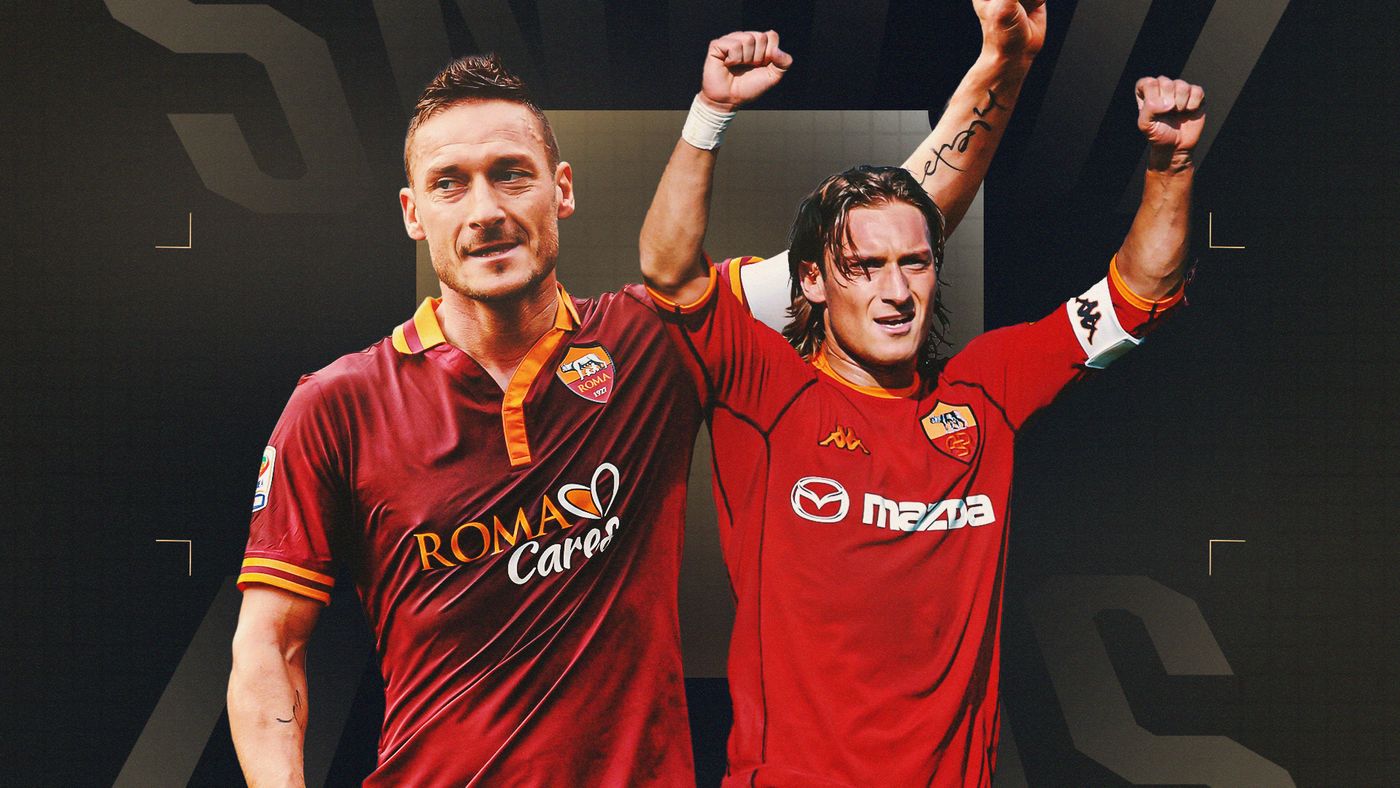
Francesco Totti compared retirement to death, that's how seriously he took his football career. "The day of my retirement, I died," he told Gazzetta dello Sport . "Leaving Roma and football was like death. It was a forced moment, a forced goodbye. I knew that sooner or later it had to happen, but for me it was painful, different from how I had imagined. I couldn't wrap my head around what was happening, I felt lost." So rare are these players such as Totti, who came to take on an entire club's identity in human form, all while displaying an irrepressible swagger in the most Italian of positions, 'the trequartista'. That, more than anything, is Totti's legacy. Being a professional athlete is really hard, while being a successful one is even more difficult. Defining a very position, however, is nigh on impossible. But doing all of that at one club for over 20 years? Well, that's just iconic. AFP Totti became synonymous with Roma after making his debut as a 16-year-old The very etymology of Totti's position suggests that he could do everything. A trequartista - roughly translated to mean three-quarters specialist - is a player who is everywhere yet simultaneously undefined. He is not a No.10, nor a second striker. Really, a trequartista's job is to play just behind the central striker, and pop up, well, everywhere. The game doesn't necessarily have to run entirely through them, but they are expected to produce in the high-pressure moments. And that's what Totti did. Totti supposedly never had a set position growing up, but he was a magician with the ball at his feet almost as soon as he could walk. There are stories of him dancing around eight-year-olds at the age of four, and by his early teenage years, every club wanted a piece of him. Totti eventually made the grade at Roma, playing two years up with the Under-15s before being fast-tracked through the age groups to the senior side. Some coaches insisted that such a gifted attacker be used as a central striker, but Totti's eye for a pass made him a dangerous creative player, too. It didn't matter in youth football - he scored, assisted, and spent game after game making opponents look silly. In late March 1993, manager Vujadin Boskov, supposedly after being pestered by midfielder Sinisa Mihajlovic, threw a 16-year-old Totti into a game against Brescia with five minutes remaining. It was not a dream debut. “I went out, warmed-up for 10 seconds and went on. I only touched the ball a couple of times – I was too excited and too happy," Totti later recalled. By the mid-1990s, though, Totti was too good to ignore. Carlo Mazzone was the first coach to truly trust him, as he was for another young Italian, Andrea Pirlo. In 1995, Totti was a regular for the Giallorossi, playing as a second striker. “I almost didn’t want him to be discovered, because at 17 you can lose your head," Roma legend Ruggiero Rizzitelli told FourFourTwo . AFP Totti became Roma's youngest-ever captain when he was handed the armband as a 22-year-old In 1997, though, the story almost changed forever. Disgruntled and perhaps a little bit lost, too, Totti was on the verge of leaving Roma. Sampdoria had made a compelling offer while Mazzone, who had first given Totti a chance and then expertly shielded him from the spotlight, was sacked the summer before after going three years without a trophy. Totti was so effective, so early, because of the relationship he held with Mazzone. Totti, as the story goes, was a naughty boy who was kept in line by a strict Catholic mother. He was immensely gifted but also cheeky, and occasionally rather lazy. Mazzone had figured out that a player like him needed to be loved and cared for - not ordered around or pandered to. Mazzone's replacement, Carlo Bianchi, was the complete opposite. A strict authoritarian who loathed the Roman image that even a teenage Totti had painted for himself, Bianchi took the hard route. Totti was benched, denied the No.10 shirt, and told, in no uncertain terms, to behave himself. Roma, however, continued to struggle, and Bianchi was dismissed after just one season in the job. His replacement, Zdenek Zeman, handed Totti the keys to the kingdom the year after. The No.10 shirt was immediately his, and so was the captaincy, after a team vote determined that Totti would be the perfect on-pitch leader for the side despite being just 22, making him the youngest Roma captain ever. AFP A Scudetto triumph in 2001 remains the finest achievement of Totti's career That newfound responsibility suited the swaggering Totti. He scored 30 goals and added 26 assists in the next two seasons, with a rebuilding Roma finishing fourth and then fifth. Among those 30 strikes was the first signature Totti 'cucciaio' or 'spoon lob'. "Zeman wants me to entertain,” he said of his unique technique. “People go to the stadium for the spectacle, not just to see us win. Entertaining is an honour and a responsibility. It pushes me to try to produce a piece of skill, like the lob at Parma." And it only continued from there, as Fabio Capello pieced together perhaps the finest Roma side in recent memory. There were legends all over the pitch, from Cafu and Walter Samuel to Emerson and Gabriel Batistuta. And of course, Totti at the centre of everything. He bagged 13 goals and won Serie A Player of the Year as Roma won the title in 2000-01, with many believing that would begin a golden era at Stadio Olimpico. But it was not to be. Much has been made of the Capello-Totti relationship - or lack thereof. Totti enjoyed his best years under Capello, but both wanted to take credit for Roma's third Scudetto win ever, and they were never really friends, arguing game after game. Capello once infamously said 'Here, you have to decide whether you're a Totti fan or a Roma fan'. In the end, Capello was neither. The coach tore into Totti in training after a lackadaisical session, and Totti argued back. The press got wind of the incident, and Capello was gone by the end of the 2003-04 season. AFP Totti provided four assists to help Italy win the 2006 World Cup Luciano Spalletti eventually figured Totti out - albeit by accident. In a game against Sampdoria in December 2005, Totti played as a loan centre-forward, without really playing up front. On paper, Roma played a 4-6-0 formation. And it was the start of something wonderful. Runners from midfield ensured that they still had plenty of attacking options alongside Totti, and Roma went 11 games unbeaten, including a win over Inter at San Siro, to put themselves right in the mix for the title. Totti, however, suffered a tragic ankle injury in February 2006 that stalled Roma's momentum and saw them drop out of the Scudetto race. That was also a World Cup year, and Totti worked tirelessly to get himself fit for selection having netted 15 league goals before his campaign was cut short. Marcello Lippi, then the Italy boss, promised that Totti would be selected if he was fit enough, and he was true to his word. Totti subsequently played in all seven matches, assisting four goals as Italy won the World Cup. “I am sorry not to have been at 100 percent,” Totti said later. “But, after everything that happened, if someone had said at the beginning of the tournament, ‘You can be there and only 30% fit and win the World Cup’, I would’ve accepted it willingly even if not playing at my best.” Totti showed no such signs of frailty the following season, as he scored 32 goals and assisted a further 15 while Roma won the Coppa Italia. His volley against Sampdoria that year is regarded as one of the best Serie A goals of all time. That season, would, return the final piece of silverware of Totti's career. Getty Images Sport Totti made a career off being unapologetically Roman Totti's impact can't be measured in goals, assists or trophies. He was so synonymous with Roma that it's easy to almost forget about him as a player. Roma is Totti, and Totti is Roma. He was unapologetically himself throughout a 24-year career, even if that meant rubbing fans and managers alike up the wrong way. Totti had a brash, even reckless vibe about him. There were silly red cards - such as a lashing out at Mario Balotelli in the 2010 Coppa final - thumb-sucking celebrations, and the admission that he has never read a book because, 'I sit down, read the first pages, then get tired.' There was his celebrity lifestyle, too. Totti married a showgirl and the wedding was aired on TV. They were in magazines and all over tabloids. Totti also likes cars and motorbikes, and appeared in a handful of legendary Nike commercials, as well as on the cover of FIFA and, in 2010, he helped promote a 10th anniversary re-release of Gladiator. First and foremost, though, Totti was a die-hard fan of his club and his city: “I pay for being Roman. They tease me for my accent, my mannerisms, for swearing. Perhaps they do not like it that there’s a great player at Roma. Football power is no longer just in the north, yet that’s what they always make out. Us Romans are spoiled, lazy, in-your-face, sensitive, fat. Racism is a strong word – perhaps discrimination is the right one. They can think what they like. I was born Roman and I’ll die Roman. I’ll never leave this team or my city. I’ll never give them that satisfaction." Three-hundred-and-seven goals and a Serie A title later - all in the colours of the Giallorossi - and it's hard to say that Totti made the wrong choice to remain at home.