Eritrea becomes 34th country to eliminate blinding eye disease
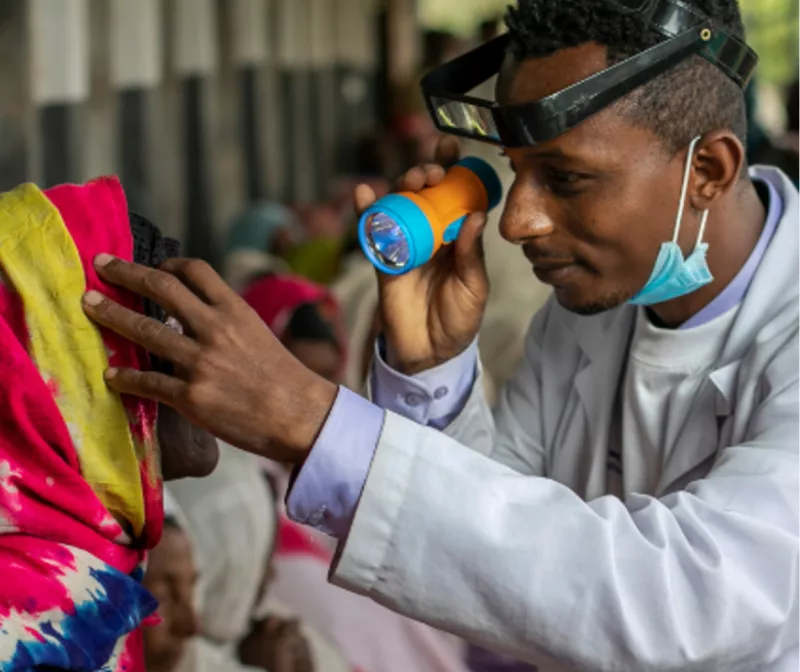
Trachoma is the world's leading infectious cause of blindness.. Eritrea has become the 34th country globally to eliminate trachoma as a public health problem, following nearly two decades of efforts to prevent infections that can cause permanent blindness. The World Health Organization (WHO) announced on November 16 that it had validated the achievement, making Eritrea the 11th country in its African Region to reach the milestone. Trachoma is the world's leading infectious cause of blindness. It is caused by the bacterium Chlamydia trachomatis and spreads through contact with discharge from the eyes and nose of infected people. It can also spread through contaminated items such as towels. Repeated infections cause scarring inside the eyelid, eventually making the eyelashes turn inwards and rub against the eye. This condition, known as trachomatous trichiasis, can damage the cornea and lead to irreversible blindness if not treated. The disease is closely linked to poverty, poor sanitation and inadequate access to clean water. Children are particularly vulnerable to infection, while women are disproportionately affected by the advanced stages of the disease. “I congratulate the Government and people of Eritrea on this historic achievement,” said WHO Director-General Dr Tedros Adhanom Ghebreyesus. “After two decades of determined effort, Eritrea has consigned trachoma as a public health problem to history. This is a victory for the communities most affected by this devastating disease, and a powerful example of what sustained national commitment can achieve.” Eritrea's achievement follows the establishment of its National Blindness Prevention Programme in 2006. The Ministry of Health led the programme, working with communities and organisations including The Fred Hollows Foundation, UNICEF, the International Trachoma Initiative, the END Fund and WHO. The country conducted disease surveys between 2006 and 2020 to identify affected communities and determine where interventions were needed. Health workers used a combination of treatment, surgery and hygiene education to control the disease. Community health agents conducted house-to-house visits, while mobile surgical teams reached people living in remote areas. Schools promoted face and handwashing, while local leaders encouraged better sanitation and hygiene. The interventions followed WHO's Safe strategy, which stands for surgery to correct inward-turning eyelashes, antibiotics to clear infection, facial cleanliness to reduce transmission and environmental improvements, particularly better access to water and sanitation. WHO said Eritrea surveyed all its 58 sub-zobas, which are second-level administrative areas, and directed interventions to areas where the disease was found. Health workers also used digital tools to collect information and map affected communities, helping the country identify people who needed treatment. The antibiotics used were mainly oral azithromycin donated by pharmaceutical company Pfizer through the International Trachoma Initiative. The Fred Hollows Foundation chief executive Ross Piper said the achievement demonstrated the importance of sustained government leadership and community involvement. “Eritrea’s achievement shows what is possible when national leadership, high-quality data, community ownership and committed partnerships come together behind a clear elimination goal,” he said. “This sustained locally-led work found and treated people at risk of blindness, stopped transmission in communities and built systems that can protect future generations.” He said the experience could help other countries struggling with trachoma and other neglected tropical diseases. “The lesson from Eritrea is clear – elimination is achievable when programs are owned by countries, trusted by communities and guided by evidence,” Mr Piper said. “Eritrea’s experience offers a powerful model for other countries working to eliminate trachoma and other Neglected Tropical Diseases,” he said. Unicef Australia Senior International Programmes Manager Bethany Stirling said the achievement demonstrated the importance of combining eye health services with improvements in sanitation and hygiene. "The Fred Hollows Foundation has been a long-standing leader in supporting eye health in Eritrea and UNICEF is proud to work with them, along with government and communities, to strengthen the water, sanitation and hygiene systems in Eritrea that help prevent infection. “By combining investments in eye health with stronger hygiene practices, improved sanitation and community-led behaviour change, Eritrea has eliminated a preventable disease and profoundly improved the lives of many people. "We are delighted to have collaborated with Fred Hollows Foundation and congratulate the government and people of Eritrea on reaching a milestone that will benefit children and families for generations to come." The END Fund East Africa Regional Representative Kimberly Kamara said the organisation had supported Eritrea's national programme since 2016 through its partnership with The Fred Hollows Foundation. "The END Fund applauds the Government of Eritrea's sustained dedication and political will in eliminating trachoma as a public health problem. It has been an immense privilege to support the national program since 2016, through our partnership with The Fred Hollows Foundation. "This progress will protect the sight, and with it the livelihoods of communities across Eritrea for generations to come." WHO said its validation followed an independent review of evidence submitted by Eritrea's Ministry of Health. Countries must demonstrate that trachoma has fallen below specified levels in every previously affected district and that they have systems to identify and treat new cases. This means elimination as a public health problem does not necessarily mean that no one can ever contract the disease again. Continued surveillance is required to prevent it from returning. WHO said Eritrea had established systems to identify and manage new cases of trachomatous trichiasis and would continue monitoring communities after the validation. Despite progress globally, trachoma remains a major public health concern in several countries. WHO estimates that about 92 million people were living in areas where trachoma remained endemic as of March 2026. The disease remained a public health problem in at least 29 countries. In 2025, nearly 99,000 people underwent surgery for the advanced stage of the disease, while 47.4 million received antibiotics. The number of people requiring interventions against trachoma has fallen significantly, from an estimated 1.5 billion in 2002 to fewer than 100 million by November 2025. Eritrea is also the 66th country globally and the 23rd in WHO's African Region to eliminate at least one neglected tropical disease. Neglected tropical diseases are a group of illnesses that affect more than one billion people worldwide, particularly those living in poor communities with limited access to healthcare, clean water and sanitation. WHO has set 2030 as the target for eliminating trachoma as a public health problem globally.