Early Mepolizumab Use to Induce Remission in Rare EGPA Vasculitis May Pay Off
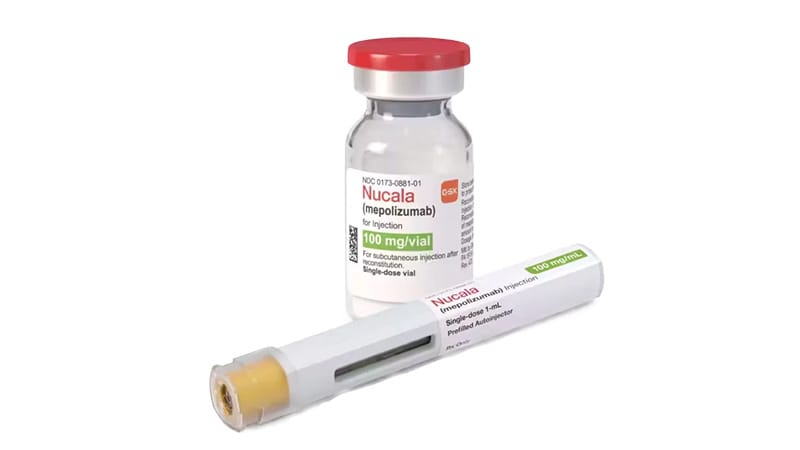
Use of the interleukin-5 inhibitor (IL-5) mepolizumab to treat patients with eosinophilic granulomatosis with polyangiitis (EGPA) proved no better than a conventional therapy strategy for inducing remission at 24 weeks than did a, according to results from the randomized E-MERGE trial. However, evidence from the trial, presented at the American College of Rheumatology (ACR) 2026 Annual Meeting , suggests that patients who went into remission at 24 weeks after receiving mepolizumab were significantly more likely also to be in remission at 1 year, including off of glucocorticoids, than those receiving a conventional remission induction regimen. In each arm of the 100-patient, “double-blind, double dummy” trial that was conducted at 26 centers in France, about three fourths of patients were newly diagnosed and had nonsevere EGPA, which is a rare form of vasculitis that affects an estimated 1.6 individuals per 1,000,000 people and can be life-threatening. “For patients with nonsevere EGPA, initiating mepolizumab treatment at the time of diagnosis or relapse appears to be crucial for reducing the need for glucocorticoids and managing asthma and sinus disease during the first year,” study presenter and first author Benjamin Terrier, MD, PhD, professor of internal medicine and professor with the National Referral Center for Rare Systemic Autoimmune Diseases at Hôpital Cochin, AP-HP, Université Paris Cité, Paris, France, told Medscape Medical News . “However, clinicians should not expect to see a visible difference within 6 months.” Benjamin Terrier, MD, PhD In 2017, the FDA approved mepolizumab as the first targeted treatment for EGPA. However, the drug was approved largely as an add-on therapy. The current study was notable in part because it assessed mepolizumab as a first-line agent for EGPA, in addition to glucocorticoids, experts said. ‘This Study Is Going to Change Our Approach’ Despite the study’s mixed results, one expert not affiliated with the trial said the findings could have a considerable impact on how clinicians manage the disease. “I do think this study is going to change our approach to the use of IL-5 inhibition in EGPA,” Lindsay Lally, MD, associate professor of clinical medicine at Weill Cornell Medicine, and attending physician in the Division of Rheumatology at Hospital for Special Surgery in New York City, told Medscape Medical News . “Historically, many of us have added IL-5 inhibitors in EGPA patients with steroid dependence or refractory sinonasal disease or asthma. This study suggests benefit of employing this therapy early for management of all EGPA manifestations.” Lindsay Lally, MD The trial enrolled patients with newly diagnosed or relapsing active EGPA, with every patient receiving the same prednisone taper. One group received oral glucocorticoids plus mepolizumab 300 mg subcutaneously every 4 weeks (n = 51), while the other group received conventional treatment (n = 49), which was glucocorticoids alone for patients with mild symptoms (Five-Factor Score [FFS], 0) and glucocorticoids plus intravenous cyclophosphamide followed by azathioprine for patients with severe symptoms (FFS ≥ 1). All patients also underwent an identical standardized glucocorticoid taper. The trial’s primary endpoint of remission at day 168, defined as a Birmingham Vasculitis Activity Score of 0, a prednisone dose ≤ 4 mg/d, and the absence of any adjudicated EGPA-related event, was achieved in 66.7% of patients in the mepolizumab group and 67.3% in the conventional therapy group (adjusted odds ratio [aOR], 0.87; 95% CI, 0.35-2.17; P = .77). However, remission at both day 168 and day 364 occurred more frequently with mepolizumab than with conventional therapy (54.9% vs 22.4%; aOR, 4.38; 95% CI, 1.78-10.78; P = .001). Glucocorticoid-free remission at day 364 was also more frequent with mepolizumab than with conventional therapy (56.9% vs 24.5%; aOR, 4.31; 95% CI, 1.78-10.46; P = .001). Cumulative glucocorticoid exposure also favored mepolizumab recipients, with a normalized area under the curve of 10.3 mg/d vs 12.1 mg/d (adjusted difference, -1.71; P = .04). EGPA-related events occurred in 29.4% and 63.3% of the mepolizumab and control groups, respectively (adjusted hazard ratio, 0.39; 95% CI, 0.21-0.72; P = .003), owing mainly to fewer asthma and ENT exacerbations. No new safety signals were identified, Terrier noted. Adverse events occurred in 50 vs 47 patients receiving mepolizumab vs conventional therapy. Serious adverse events occurred in 24 and 43 participants in the respective groups. “Serious adverse events occurred more frequently with conventional therapy (87.8% vs 47.1%), largely because the protocol required all relapses and all asthma or ENT exacerbations to be reported as serious adverse events,” Terrier said. Lally said a future study could include the drug rituximab, which is commonly used to treat EGPA but was not included in the current study. “Rituximab is often used as part of induction therapy or for active vasculitic manifestations of EGPA and was not used in this study,” Lally said. “It is not clear if patients receiving rituximab as conventional therapy might have had different outcomes, especially at 1 year.” The trial was conducted by the French Vasculitis Study Group, and GSK, the manufacturer of mepolizumab, provided the drug and a matching placebo. Terrier disclosed having financial relationships with AstraZeneca, Boehringer Ingelheim, CSL Vifor, GSK, and Novartis. Lally reported having no disclosures. Scott Harris has been covering rheumatology for more than a decade. He lives near Washington, DC.