Cybercab’s $299 Monthly Fee Is the Catch in a $29,990 Car
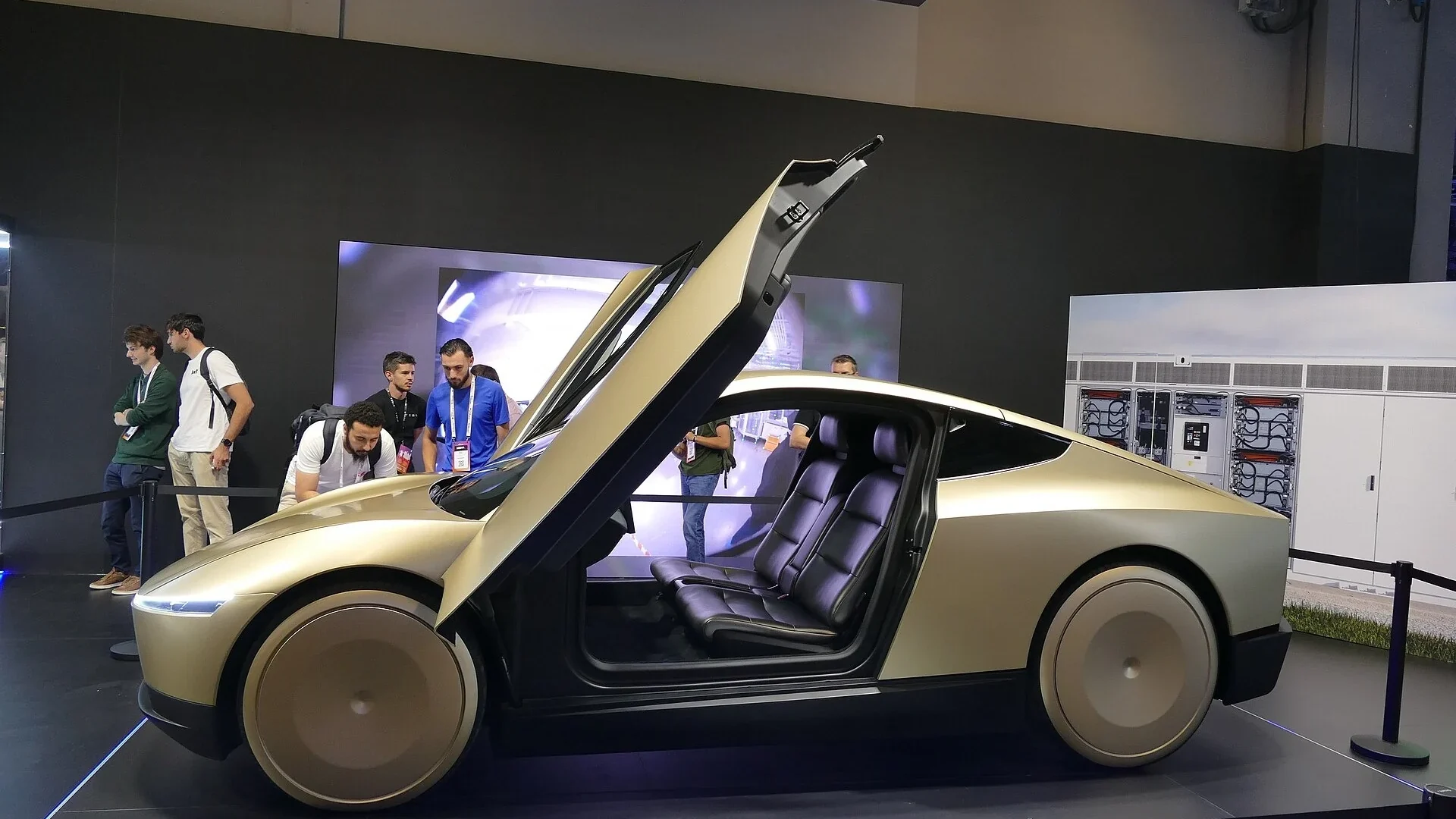
Tesla’s Cybercab, a two-seat autonomous vehicle with no steering wheel and no pedals, costs $29,990 before taxes for select invited customers. The catch sits one line below the price. Reporting from WIRED, Yahoo Finance, MoneyWise.com, American Cars And Racing, Benzinga and TradingView says Tesla’s order materials attach a $299 per month autonomy subscription, and that the car needs it to operate. What Tesla Has Actually Confirmed So Far How the $299 Monthly Fee Adds Up Over Time The Per-Day View When the Subscription Outgrows the Sticker Price What the Subscription Reportedly Covers Supported Service Areas: Where the Car Works Is Tesla’s Call The $1,000 Deposit and the December Austin Window Hardware as a Service: Why the Business Model Matters Claims Circulating That the Reporting Does Not Support How the Cybercab Model Compares With Other Ways to Ride Where Each Model Wins Market Impact: What Buyers and Investors Should Weigh Historical Context: Cars Learn to Bill Monthly Five Predictions for Cybercab Ownership What to Ask Before Paying the Deposit The Takeaway FAQ Related Coverage The wording matters more than the number. Tesla’s order materials reportedly state: “Subscription and regular vehicle maintenance required to operate.” That sentence turns the Cybercab from a product you buy into a product you rent access to, even though you pay the sticker price up front. The first month of the subscription comes with the purchase, and every month after that bills at $299. We already covered the headline math in our look at what Cybercab costs to own at $29,990 plus $299 a month . This analysis goes further. It lays out the long-run cost curve, separates confirmed terms from rumors, compares the model with other ways to get an autonomous ride, and sets out what buyers and investors should watch before the first cars reach customers in December 2026. Google · Preferred Sources Don't miss new tech stories on Google Add Shattered once in the Google app and our stories show up in your news suggestions. Add now What Tesla Has Actually Confirmed So Far Start with the solid ground. Several outlets report the same core terms, and they line up with each other. The Cybercab is priced at $29,990 before taxes. The autonomy subscription runs $299 per month, with the first month included in the purchase. An order requires a $1,000 non-refundable deposit. The estimated delivery window is December 2026 in Austin, Texas, according to the reported order page. Tesla has described the release as limited. Select customers receive invitations to buy the vehicle for personal use. The invitation reportedly says: “Only available in supported service areas. Subscription required for operation.” That sentence carries two conditions in one breath. The car works only inside areas Tesla supports, and it works only while the subscription stays active. Coverage also describes the hardware. Available reporting points to a two-seat layout with no steering wheel, no pedals, no side mirrors and no rear window. That design explains why Tesla can tie the subscription so tightly to operation. A driver cannot take over a car that has no controls to take over with. If the software service stops, the hardware has no fallback mode. What Tesla has not confirmed is just as important, and we cover those gaps in a later section. The short version: the number of customers in the limited release is unknown, and the full list of supported service areas has not been published in the reporting we reviewed. How the $299 Monthly Fee Adds Up Over Time Monthly prices hide their weight. A $299 charge feels like a phone plan until you stack it against the car itself. The table below uses only the confirmed figures: $29,990 for the vehicle and $299 per month, with the first month included. It excludes taxes, the maintenance the order materials say is required, insurance, and any charging costs, because the fact sheet gives no numbers for those. Ownership period Paid subscription months Subscription total Car plus subscription 1 year 11 $3,289 $33,279 2 years 23 $6,877 $36,867 3 years 35 $10,465 $40,455 5 years 59 $17,641 $47,631 10 years 119 $35,581 $65,571 These totals are our arithmetic, not figures from Tesla or any outlet. The $1,000 deposit is not netted out, because no source we reviewed says whether it counts toward the price. Our earlier piece on the $17,940 five-year subscription total counted all 60 months at $299. The version above subtracts the included first month, which trims about $299 from every row. The Per-Day View Twelve billed months cost $3,588 a year. Spread across 365 days, that comes to roughly $9.83 a day. For a car that may sit idle for much of the day, that rate lands near the cost of a daily coffee-and-lunch habit, and it never pauses. A buyer who travels for a month still pays the full $299 if they want the car ready on return, assuming the terms match the reported language about the subscription being required to operate. When the Subscription Outgrows the Sticker Price Here is the number that reframes the deal. Divide $29,990 by $299 and you get about 100.3 months. With the first month included, the 101st paid month pushes cumulative subscription spending past the vehicle’s purchase price. That lands a little over eight and a half years into ownership. A buyer who keeps the Cybercab past that point could spend more on access than on the car itself. That is our inference from the confirmed prices, not a Tesla statement. It also assumes Tesla holds the $299 rate flat. Nothing in the reporting says the price is locked for the life of the vehicle. The assumption deserves attention. The order language says a subscription is required to operate. It does not, in the coverage we reviewed, promise a fixed rate, describe a notice period for price changes, or explain what happens to a car whose owner cancels. Those are exactly the clauses that decide whether a recurring fee is a fair service charge or a lever Tesla can pull later. Two buyer types face very different math. A buyer who plans to use the car daily as a private autonomous vehicle gets full value from the $299. A buyer who wants a second car for weekends pays the same fee for a fraction of the use. The flat monthly structure rewards heavy users and punishes light ones, which is the opposite of how most car costs scale. What the Subscription Reportedly Covers Reporting about Tesla’s subscription documents lists autonomous driving, connectivity, remote support, roadside assistance and certain maintenance items. That bundle is broader than the label “autonomy subscription” suggests. Some of it resembles what buyers already pay for in other ways, such as roadside assistance and connectivity. Bundling creates a fairness question. If the $299 replaces a roadside plan, a connectivity plan and part of a maintenance budget, it looks less like a surcharge and more like a consolidated service contract. If it sits on top of separate maintenance bills, the order language about “regular vehicle maintenance” suggests buyers may still pay for upkeep beyond what the plan includes. The reporting says certain maintenance items are covered, and the word certain is carrying a lot of weight. Remote support deserves a closer look. A car with no steering wheel needs a human fallback for edge cases, and remote support is how a fleet operator typically supplies one. Listing it inside the subscription suggests Tesla treats each Cybercab as a node in a managed service rather than a standalone product. For buyers, that means the car’s reliability depends on Tesla’s support infrastructure staying staffed and funded. Buyers should ask for an itemized list before paying the deposit. Which maintenance items count as certain? Does roadside assistance cover towing? Does connectivity include data for passengers? The reporting does not answer these, and the deposit is non-refundable. Supported Service Areas: Where the Car Works Is Tesla’s Call The service-area clause may matter more than the fee. A conventional car drives anywhere roads exist. The Cybercab, by Tesla’s reported terms, is available only in supported service areas, and operation requires the subscription. Together those conditions mean Tesla decides where a customer’s $29,990 purchase can function as an autonomous vehicle. Our existing breakdown of the Cybercab’s nonrefundable deposit and geofenced service areas walks through the same clause. The open question is the map itself. Some online posts claim the car will run only in Texas and Florida. The available reporting does not establish a complete official list, so we treat that claim as unconfirmed. Geofencing creates a relocation risk. A buyer who moves from an approved metro to an unsupported one would own a car that cannot operate as sold. The reporting does not say whether Tesla would refund, transfer or pause a subscription in that case. For an early adopter in Austin, the risk looks small today. For a buyer planning a move in 2027, it deserves a question to Tesla in writing. The map will also grow or shrink with regulators. Every jurisdiction sets its own rules for driverless vehicles, and Tesla’s supported list will track those rules. That ties the value of an owner’s car to political decisions in cities the owner may never visit. The $1,000 Deposit and the December Austin Window Orders require a $1,000 non-refundable deposit, according to reports. Delivery is estimated for December 2026 in Austin, Texas. That window opens within weeks, a tight schedule for a vehicle with no steering wheel. Our note on the December delivery promise and invite-only rollout covers why no wider dates exist. A non-refundable deposit shifts timing risk to the buyer. If Tesla slips the estimate, the buyer’s $1,000 stays committed. The reporting does not describe a remedy for late delivery, and estimated dates on order pages are not guarantees. That is standard practice across the auto industry, but it feels sharper when the product is new and the invitation list is small. The exact number of customers in the limited release is unconfirmed. Without that figure, nobody can judge how scarce the first cars are, how much Tesla can learn from the first wave, or how many support calls the remote team must handle in month one. A cohort of a few dozen behaves differently from a cohort of a few thousand. Hardware as a Service: Why the Business Model Matters Step back from the Cybercab and the pattern looks familiar. Printer makers sell cheap devices and profit from ink. Game consoles sell near cost and earn on software. Smartphone makers lean on services. Tesla’s version pushes that logic into a $29,990 vehicle, where the monthly stream could eventually exceed the one-time sale. For a manufacturer, recurring revenue smooths earnings and rewards software investment. A car sold once produces one margin. A car sold with a $299 subscription produces a margin plus an annuity, for as long as the car stays on a supported road. Investors tend to value annuities at higher multiples than hardware margins, which helps explain why every large vehicle maker has studied subscription features. For the buyer, the shift moves the product’s value from owned hardware to licensed capability. A traditional car holds resale value because the next owner can use it without asking the maker’s permission. A Cybercab that cannot operate without an active subscription holds resale value only if the next owner can sign up on the same terms. The reporting does not say whether subscriptions transfer between owners. Analysts tracking the launch have focused on early validation of the $29,990 price. Our piece on J.P. Morgan’s early-validation view of the $29,990 Cybercab covers that reading. The subscription adds a second half to the story that price-focused commentary often skips. Claims Circulating That the Reporting Does Not Support A fast-moving launch attracts rumors, and this one has several. The table below separates what the available reporting supports from what it does not. We include the unconfirmed items so readers can recognize them when they surface in social posts and comment threads. Claim Status What the reporting shows Price of $29,990 before taxes Reported by multiple outlets Select invited customers, personal use Autonomy subscription of $299 per month Reported by multiple outlets First month included with purchase $1,000 non-refundable deposit Reported Required to place an order Delivery in December 2026 in Austin Reported, estimated Taken from the order page, not a guarantee Operation limited to supported service areas Reported Quoted from Tesla’s invitation Cybercab works only in Texas and Florida Unconfirmed No complete official list in the reporting Tesla may repurchase the car or charge a $50,000 resale penalty Unconfirmed Not corroborated by stronger sources Fee should be closer to $115 a month Unconfirmed Attributed to an X post without primary-source verification Exact number of customers in the limited release Unconfirmed No figure in the available results Treat each unconfirmed row as a rumor until Tesla’s own terms say otherwise. The resale-penalty claim stands out as the one most likely to change buyer behavior, and it has the weakest support. If it were true, it would alter the ownership math more than any monthly fee. Until a primary document backs it, readers should not weigh it in a purchase decision. The $115 figure comes from an X post that the available coverage describes but does not verify. We do not repeat it as a statement of intent, and we do not model it. If Tesla changes the price, the company will say so in its own materials. How the Cybercab Model Compares With Other Ways to Ride Three paths now lead to an autonomous ride. You can hail a vehicle owned and run by a fleet operator and pay per trip. You can buy a car with partial automation and drive it yourself. Or you can buy a Cybercab-style vehicle that is fully autonomous but locked to a subscription and a service area. The fleet route puts maintenance, insurance and fallback support on the operator. The rider pays by the trip and owns nothing. The partial-automation route keeps the driver in charge and the car portable, but the human stays responsible. The Cybercab sits between them. The owner holds the title and carries the capital cost, while Tesla keeps control of the software, the support and the map. Where Each Model Wins Fleet rides win for occasional users, because they avoid the capital outlay and the fixed monthly fee. Partial automation wins for drivers who travel outside any supported area. The Cybercab wins for a household that wants a private autonomous car at predictable monthly cost inside a supported zone. That is a narrow group at first, which fits Tesla’s decision to invite select customers rather than open orders to everyone. The comparison also shows why the subscription is not a pure surcharge. A fleet rider pays a per-trip price that already includes the operator’s software, support and maintenance. A Cybercab owner pays those costs separately, as a flat monthly fee. Seen that way, $299 is a fixed price for services that a rider would otherwise buy in pieces. Whether it is a good price depends on how much the owner drives. Market Impact: What Buyers and Investors Should Weigh For buyers, the main impact is on total cost of ownership. A $29,990 car with a $299 monthly fee behaves like a lease with a purchase attached. The monthly stream continues after the buyer has paid the full price, which is unusual in a market where buyers expect payments to end. For investors, the subscription is the interesting part. A $299 monthly fee across a growing base of cars produces predictable revenue that does not depend on new vehicle sales. We do not have a customer count, a production number for the first wave, or a revenue forecast from any named source, so we do not model one here. The structure is clear even if the scale is not. Tesla also carries a risk that comes with the model. A subscription business lives on retention. If owners decide $299 is too much and cancel, the car loses its main function, and the company inherits unhappy customers with a $29,990 asset that cannot do what they bought it to do. That makes pricing power fragile in a way that traditional vehicle sales are not. Hardware watchers can also read the launch as a data point on how far vendors will push the pay-to-operate model. Our hardware section tracks the same pattern in GPUs, headsets and handhelds, where more capability is moving behind recurring plans. Historical Context: Cars Learn to Bill Monthly Automakers have spent years testing recurring charges. Connected-car plans, paid feature unlocks and over-the-air upgrades have moved from experiment toward routine. Each test drew some pushback, mostly from buyers who felt they had already paid for the hardware. The Cybercab goes a step further than those earlier experiments. Earlier plans unlocked extras on a car that still drove without them. This one reportedly requires the subscription for operation itself. That difference turns a feature fee into an access fee, and it explains why the story drew coverage from outlets that normally ignore a niche vehicle launch. Five Predictions for Cybercab Ownership These predictions are our analysis, not reported facts. We offer them so readers can check them against events. Full subscription terms will draw scrutiny. Consumer groups and reporters will ask for the complete contract, including price-change rules and cancellation language, once the first owners receive cars. Transferability will become the key resale question. Used-car buyers will want to know if a second owner can activate the subscription, and the answer will set secondhand prices. The service-area map will become the most watched document. Owners and reviewers will track every addition and removal, because the map defines what the purchase is worth. Rivals will market the absence of ownership. Fleet operators will pitch pay-per-ride as a way to skip the fixed fee and the capital cost. Tesla will clarify the unconfirmed claims. The resale-penalty and repurchase rumors will either get a firm denial or a documented clause, because buyers will not tolerate ambiguity on a $1,000 non-refundable deposit. For the longer arc, our timeline of the five milestones between the Cybercab and mass adoption shows how far a one-city rollout sits from broad availability. What to Ask Before Paying the Deposit A buyer with an invitation should treat the deposit as a commitment and ask for specifics first. Is the $299 rate fixed, and for how long? What notice does Tesla give before a price change? What happens if the owner cancels, and can the car still be used or sold? Does the subscription transfer to a new owner? Which maintenance items does the plan cover, and which cost extra? Ask also about the service area. Which cities are supported on delivery day, and what is the process if the owner moves outside them? Get the answers in writing. Order pages change, and screenshots of a page are weak evidence if a dispute arises. None of these questions signals hostility to the product. They are the questions any buyer asks before signing a multi-year contract, and the subscription language makes the Cybercab one. The Takeaway The Cybercab’s headline price is real, and so is the fee behind it. At $29,990 plus $299 a month, a buyer pays about $33,279 in the first year and passes the sticker price in subscription spending after roughly eight and a half years. Tesla’s reported order language says the subscription and regular maintenance are required to operate the car, and the invitation limits the car to supported service areas. The strongest reporting supports those terms and little more. Customer counts, a full service-area list, a resale penalty and a lower fee all remain unconfirmed. Until Tesla publishes full terms, the fair reading is that the Cybercab is a $29,990 vehicle sold with a subscription that decides whether it works, and buyers should price it that way. FAQ How much does the Tesla Cybercab cost? Reports put the price at $29,990 before taxes for select invited customers. An autonomy subscription of $299 per month applies on top, with the first month included in the purchase. Is the Cybercab subscription required? According to reporting on Tesla’s order materials, yes. The reported language says a subscription and regular vehicle maintenance are required to operate the vehicle. What does the $299 subscription include? Reporting on Tesla’s subscription documents lists autonomous driving, connectivity, remote support, roadside assistance and certain maintenance items. The full itemization has not been published in the coverage we reviewed. When will the first Cybercabs be delivered? The reported order page gives an estimated delivery of December 2026 in Austin, Texas. Tesla has described the release as limited, and it has not published a customer count. Can the Cybercab drive anywhere? No. Tesla’s invitation reportedly says the vehicle is available only in supported service areas. A claim that it works only in Texas and Florida is unconfirmed, because no complete official list appears in the reporting. Is the $1,000 deposit refundable? Reports describe it as non-refundable and required to place an order. Buyers should confirm the terms in writing before paying. Will Tesla buy the Cybercab back or charge a resale penalty? Claims of a repurchase option or a $50,000 resale penalty are unconfirmed. The stronger sources in the available results do not corroborate them, so treat them as rumors until Tesla publishes its terms.