Comprehensive Genomic Profiling Reveals Lower Mutation Burden in Early-Onset Colorectal Cancer
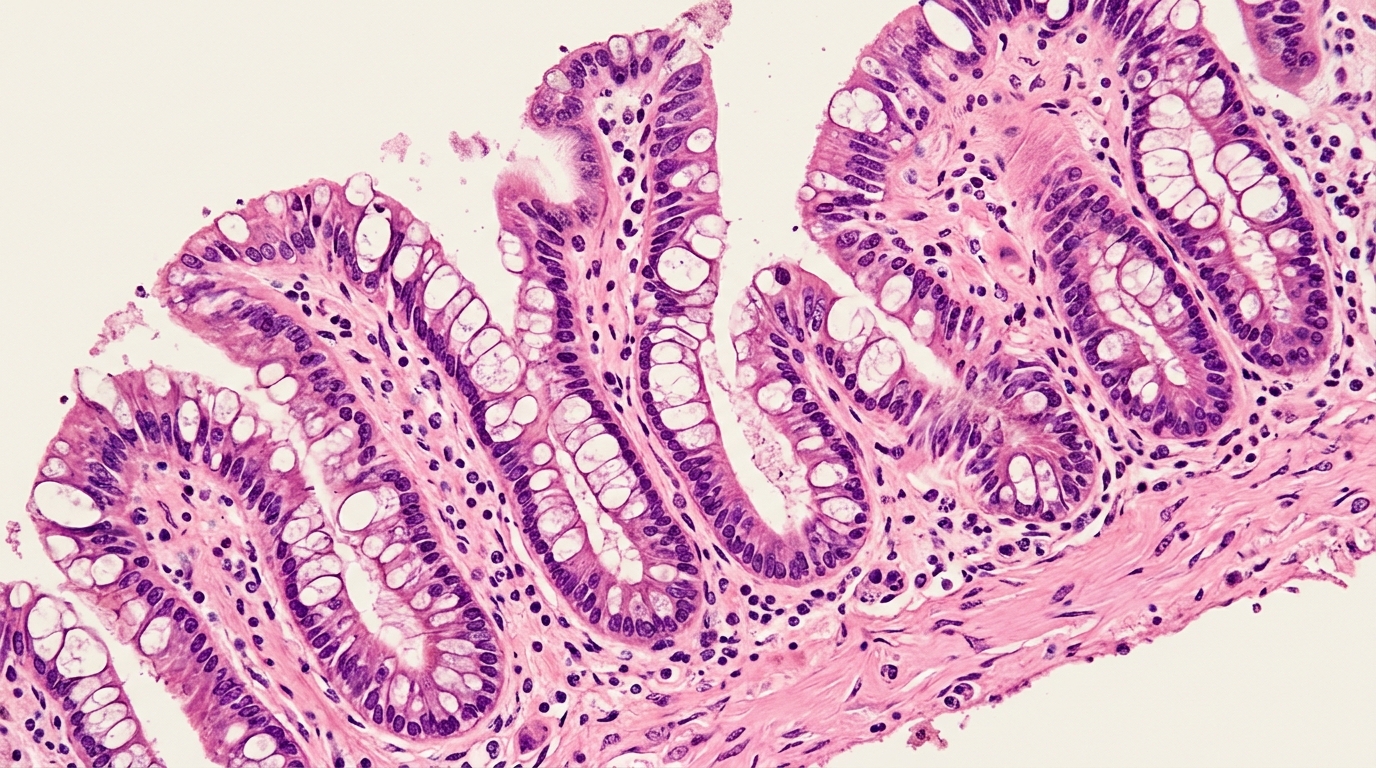
A large retrospective secondary analysis of comprehensive genomic and immune profiling data has revealed that tumors arising in patients diagnosed with early-onset colorectal cancer harbor a significantly lower tumor mutational burden compared to tumors from patients with late-onset colorectal cancer. Conducted under the Precision Oncology Biomarker Evidence protocol and published in Oncology and Therapy, the investigation evaluated molecular profiling results from 1,737 clinical colorectal cancer cases to clarify the distinct biological features of malignancies arising before age 50. While overall colorectal cancer rates have stabilized or fallen in many high socio-demographic regions, the incidence of early-onset disease has mounted steadily across successive birth cohorts, presenting an urgent clinical puzzle regarding whether these malignancies reflect earlier clinical emergence of classic adult neoplasms or distinct underlying pathological entities. The researchers examined consecutive de-identified hybrid-capture genomic and immune profiling records collected via the OmniSeq INSIGHT platform between June 7, 2021, and June 13, 2023. Stratifying patients by age at test order yielded 274 individuals categorized as early-onset colorectal cancer, defined by an age of 50 years or younger with a median age of 43.8 years, and 1,463 late-onset colorectal cancer patients over 50 years of age with a median age of 67.3 years. Tumor mutational burden measured across 523 genes was found to be 5.4 mutations per megabase in the early-onset group compared with 6.2 mutations per megabase in the late-onset cohort. Following Benjamini-Hochberg false discovery rate correction across ten comparative endpoints, this reduced mutational burden remained statistically significant at an adjusted q-value of 0.003, highlighting an inverse relationship between younger onset and overall somatic point mutation density. Beyond tumor mutational burden, the multi-gene profiling platform quantified an array of secondary immune markers and genomic indicators that exhibited no statistically verifiable divergence between age groups once adjustments for multiple testing were applied. The median rank of the tumor immunogenicity score initially appeared lower among younger individuals, recording a score of 39.7 compared to 41.8 in older patients, but this difference yielded an adjusted q-value of 0.072 and was not statistically significant. Similarly, the proportion of tumors identified as microsatellite instability-high was comparable across groups, comprising 5.6 percent in the early-onset cohort versus 6.5 percent in the late-onset group. Analyses of sequence alterations across key mismatch repair pathway genes, including MLH1, PMS2, MSH2, and MSH6, alongside cellular proliferation indices, cancer testis antigen burden, and programmed death-ligand 1 tumor proportion scores, likewise demonstrated no significant variations. The broader epidemiological context compiled in the review underscores a marked worldwide transformation in colorectal cancer dynamics. GLOBOCAN 2024 global estimates attribute approximately 2.04 million new colorectal cancer diagnoses and 917,895 deaths to the disease, establishing it as the third most diagnosed malignancy and second leading contributor to cancer mortality internationally. Despite stabilized adult patterns, age-standardized rates of early-onset colorectal cancer climbed from 2.95 per 100,000 in 1990 to 4.04 per 100,000 in 2019, accompanied by a 67.8 percent surge in attributed disability-adjusted life years over the same three decades. Population analyses across Canada, England, Australia, and the United States show annual incidence increases between 3 and 5 percent, with individuals born in the 1990s experiencing fourfold greater risk than those born in the 1960s. This pronounced generational rise aligns with shifts in environmental exposures that directly influence host physiology and intestinal microbiota during early life stages. Antibiotic administration during childhood and adolescence has increased significantly since the mid-twentieth century, overlapping precisely with birth cohorts currently facing the highest early-onset cancer risk. Concurrently, westernized nutritional patterns marked by elevated fat and diminished dietary fiber alter luminal microbial composition and metabolic output. Microbial-derived genotoxins, particularly colibactin synthesized by pks-positive Escherichia coli, generate defined mutational signatures designated SBS88 and ID18, which show selective enrichment in early-onset tumors and suggest that genotoxic insults occurring decades prior to diagnosis may seed neoplastic transformation during early developmental windows. The structural presentation of early-onset disease diverges considerably from conventional late-onset presentations, displaying a clear anatomical bias toward the distal gastrointestinal tract. Tumors diagnosed before age 50 develop predominantly within the rectum, accounting for 35 to 37 percent of cases, followed by the distal colon at 25 to 26 percent and proximal colon at 22 to 23 percent, whereas late-onset tumors distribute evenly at roughly 29 percent across rectal, distal, and proximal segments. Clinically, early-onset lesions frequently manifest as smaller left-sided primary tumors accompanied by elevated rates of lymph node metastasis, perineural invasion, and adverse histopathology such as signet ring cell, poorly differentiated, or mucinous subtypes, indicating aggressive local tumor behavior despite younger patient age. Diagnostic pathways for younger adults are further complicated by extended symptomatic timelines and reliance on traditional screening ages. While older individuals often present with occult bleeding and iron-deficiency anemia characteristic of right-sided lesions, early-onset patients typically experience overt red-flag symptoms such as rectal bleeding, abdominal discomfort, and altered bowel habits. Nevertheless, retrospective investigations document substantial diagnostic delays, with mean symptom-to-diagnosis durations reaching 243 days in younger adults compared to 154 days in older patients. Because systematic screening recommendations generally remain anchored at age 50, low clinical suspicion among healthcare providers and delayed care-seeking contribute to approximately 70 percent or more of early-onset cases being diagnosed at advanced regional or distant stages. At the molecular level, hereditary cancer syndromes such as Lynch syndrome account for an estimated 9 to 26 percent of early-onset cases, leaving approximately 75 to 80 percent of young patients classified as sporadic or non-syndromic disease. Published literature indicates lower overall mutation frequencies for KRAS, BRAF, and APC in young cohorts alongside higher frequencies of TP53 and PTEN, although substantial cross-study heterogeneity persists and common driver mutation profiles often converge when adjusting for tumor sidedness. Epigenetic investigations show up to 63 percent of microsatellite-stable early-onset tumors remain euploid and display accelerated cancer-related methylomic drift, including 234 uniquely methylated regions identified by Joo and colleagues, as well as distinct prognostic correlations with histone modifications such as H3K27me3. Profiling of the gut microenvironment points to consistent taxonomic differences, including enriched abundance of pro-carcinogenic organisms like Fusobacterium nucleatum, Parvimonas micra, and Peptostreptococcus stomatis, coupled with marked depletion of protective butyrate-producing taxa including Faecalibacterium prausnitzii, Roseburia species, and Eubacterium rectale. These microbial shifts stimulate beta-catenin signaling through virulence factors such as the FadA adhesin, impair intestinal epithelial integrity, and drive inflammatory cascades. These specific taxonomic signatures offer potential clinical utility for non-invasive detection, particularly when microbial biomarkers, methylated SEPT9 assays, circulating microRNAs, and circulating tumor DNA are integrated into multi-modal liquid biopsy screening platforms capable of detecting residual or early-stage disease. The study authors emphasize important methodological boundaries inherent to retrospective secondary analyses of commercial clinical sequencing databases. Because the OmniSeq INSIGHT test relies exclusively on tumor tissue without matched germline sequencing, detected sequence changes cannot reliably distinguish somatic variants from inherited alleles, precluding formal Lynch syndrome screening. Furthermore, the cohort definition was determined by age at test order rather than verified age at primary diagnosis, potentially introducing misclassification bias for patients diagnosed prior to age 50 who underwent testing years later for advanced disease. Because comprehensive profiling is routinely ordered for metastatic or pretreated cases, the observed microsatellite instability-high frequency of 5.6 percent likely reflects the natural depletion of mismatch repair deficiency in advanced disease settings rather than true biological underrepresentation in earlier-stage cohorts. Despite showing advanced staging at clinical presentation, early-onset colorectal cancer patients demonstrate comparable or modestly improved stage-adjusted survival relative to older cohorts, an advantage thought to stem from better baseline functional reserve, fewer competing chronic comorbidities, and greater tolerance for aggressive systemic interventions. However, younger survivors confront distinct long-term survivorship burdens encompassing chronic treatment-induced sexual dysfunction, bowel irregularity, stoma management, and impaired reproductive potential from pelvic irradiation and cytotoxic therapy. These complex health dimensions highlight the critical necessity of transitioning from rigid chronological screening thresholds toward integrated, biology-driven frameworks combining germline risk, microbial biomarkers, lifestyle factors, and comprehensive molecular profiling. Subject of Research: Clinical, molecular, and genomic characteristics distinguishing early-onset from late-onset colorectal cancer Article Title: Early-Onset Colorectal Cancer: Clinical and Molecular Features with Emerging Insights from Comprehensive Genomic Profiling Article References: Nogueira, A., Brondon, J., Haradinov, K., Gopalakrishnan, S., Huang, K., Mukherjee, D., Agarwal, S., Strickland, K. C., Vidal, L., Joshi, C., Brookes, R., Prasad, R., Das, S., Mankan, A. K., Munje, A., de las Heras, B., Singh, B. P., Gandia, D., Ramkissoon, S., ... Saini, K. S. (2026). Early-Onset Colorectal Cancer: Clinical and Molecular Features with Emerging Insights from Comprehensive Genomic Profiling. Oncology and Therapy . https://doi.org/10.1007/s40487-026-00467-2 Image Credits: AI Generated DOI: 10.1007/s40487-026-00467-2 Keywords: early-onset colorectal cancer, late-onset colorectal cancer, tumor mutational burden, comprehensive genomic profiling, microsatellite instability, mismatch repair, gut microbiome, Fusobacterium nucleatum, colibactin, oncology, cancer epidemiology, liquid biopsy, epigenetic drift, molecular diagnostics, signet ring cell carcinoma, precision oncology, cancer screening