Amazon Commits Another $7 Billion to Indian Renewables, Lifting Clean-Energy Pledge Past $11 Billion
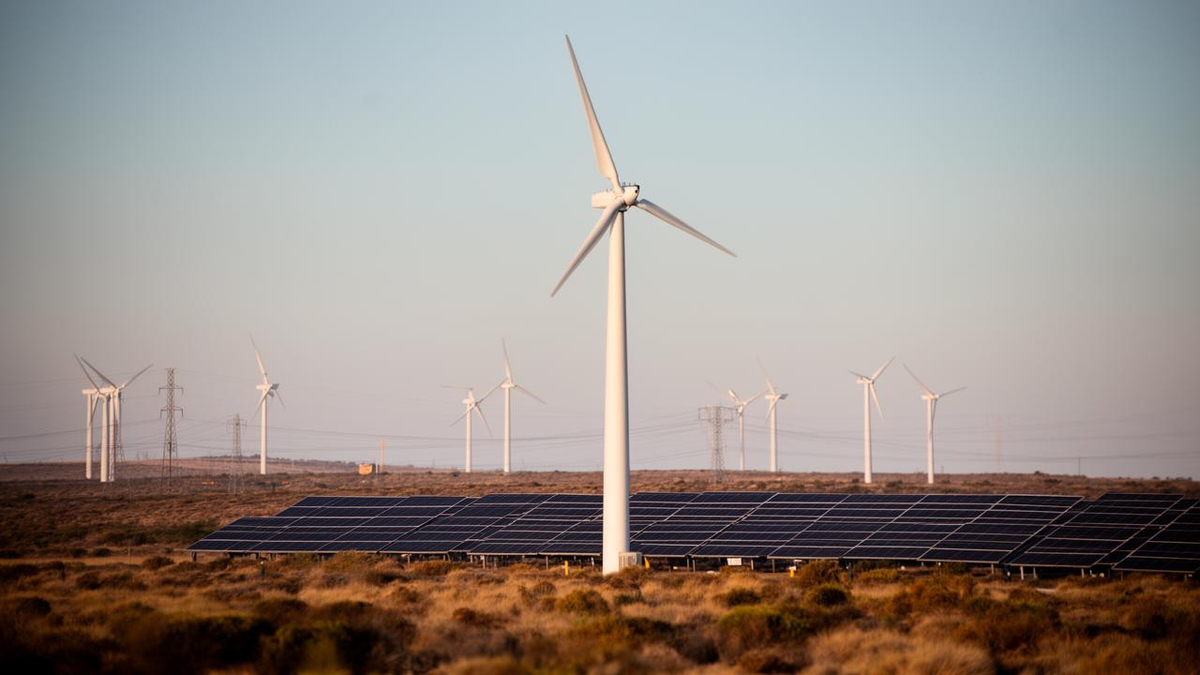
Amazon.com, Inc. (AMZN) said it will put an additional $7 billion into renewable energy projects in India through 2030, a commitment that lifts its combined contracted and planned clean-power spending in the country to more than $11 billion. The Seattle-based company announced the plan on Tuesday, pairing it with four new utility-scale wind and solar projects totaling 934 megawatts. Those projects sit within the $4 billion in renewable capacity Amazon has already contracted through long-term power purchase agreements, under which a buyer locks in output from a specific generator. The new capacity is spread across three states. Karnataka gets a 234-megawatt wind farm, which Amazon described as its largest contracted wind project in Asia to date, plus a 200-megawatt hybrid wind-and-solar facility. Madhya Pradesh accounts for a 300-megawatt solar plant and Rajasthan a 200-megawatt solar project. Project State Capacity Wind farm Karnataka 234 MW Hybrid wind and solar Karnataka 200 MW Solar Madhya Pradesh 300 MW Solar Rajasthan 200 MW Total 934 MW Once the projects come online, Amazon's contracted renewable portfolio in India will exceed 2 gigawatts, enough generation to cover the annual electricity use of more than 3.5 million Indian households, according to the company. The Indian portfolio now spans 57 projects, including 14 utility-scale wind and solar installations feeding carbon-free power into the grid and 43 rooftop solar systems at Amazon facilities. The spending is part of a global target Amazon set to cut the carbon intensity of the electricity powering its operations by 65% by 2030, measured against a 2019 baseline. The company also aims for net-zero carbon emissions by 2040 under its Climate Pledge. Worldwide, it counts more than 700 wind and solar projects with combined capacity above 40 gigawatts. "Our renewable energy investments in India reflect years of sustained effort, planning, and collaboration across the industry," said Kara Hurst, Amazon's chief sustainability officer. She said the additional $7 billion "underlines our long-term commitment, helping bring additional wind and solar capacity online while contributing to India's energy security and long-term renewable energy ambitions." Pralhad Joshi, India's union minister for new and renewable energy, education, consumer affairs, and food and public distribution, welcomed the move, saying such spending "play an important role in advancing India's clean energy ambitions, strengthening energy security, and supporting sustainable economic growth." He added that the investments "demonstrate the growing confidence of global companies in India's renewable energy sector" and its ability to draw long-term capital and speed the country's energy transition. Beyond power generation, Amazon is pushing into electric mobility, water stewardship and packaging in India. It has deployed more than 15,000 electric vehicles across over 500 cities and is working with Tata Motors to put 3,000 electric trucks on the road, which the company says would be the largest planned electric truck fleet for an e-commerce operator in the country. On water, Amazon said it reached water-positive status in India in 2025, two years ahead of a 2027 goal, returning more than 120% of the water used in its direct operations to local communities and watersheds. It has committed over $6 million to water projects expected to replenish more than 4 billion liters a year. More than half of customer orders in India now ship in reduced or original packaging, and the company is working with the Indian Institute of Technology Roorkee to develop alternative materials from agricultural residue. The announcement lands as global technology companies compete for limited supplies of Indian renewable power to run data centers and logistics networks, a race that has made long-term purchase agreements a scarce commodity. Committing capital at this scale gives Amazon a claim on future capacity and a hedge against volatile grid prices, while giving developers the revenue certainty that Indian lenders typically demand before financing wind and solar farms. For India, the pledge supports a power system straining to keep pace with demand from industry and a fast-growing digital economy. For investors, the commitment adds long-dated capital spending to a company already under scrutiny for the cost of its infrastructure build-out, though the projects are structured through contracts rather than direct ownership of generation assets. Amazon shares slipped in Tuesday trading alongside weaker index futures. The stock was trading below its 20-day moving average but above its 50-, 100- and 200-day averages, with a relative strength index near 49.5 that points to neutral momentum. Analysts carry a consensus Buy rating and an average price forecast of $333.56, according to Benzinga Edge Rankings data. Once added, BigGo Finance appears first in Google Search Top Stories, so you get the broadest, most up-to-the-minute, and most comprehensive global financial news first. Add preferred source