40 Spaceplanes On Standby: How China's AI-Designed Fleet Could Begin Journey To Anywhere On Earth In Minutes
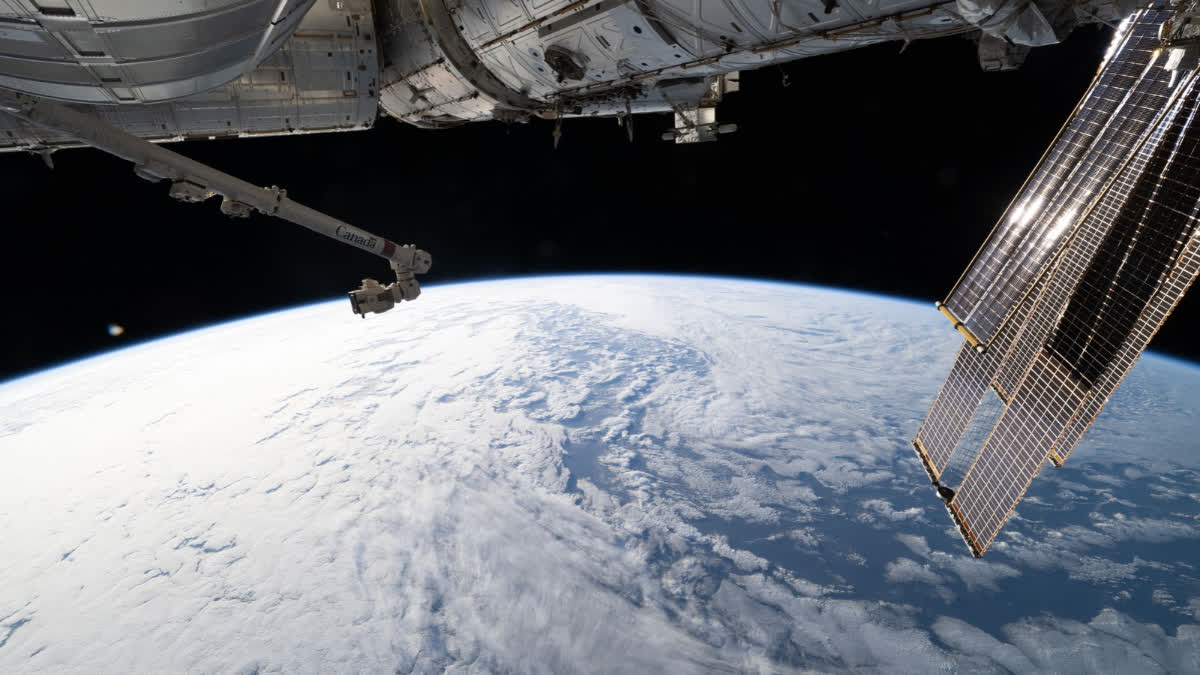
ETV Bharat / technology A new Chinese simulation study proposes an AI-designed constellation of 40 orbital spaceplanes capable of initiating descent toward any global target within minutes. Image for representation purposes only ( File Photo; Credits: NASA ) By ETV Bharat Tech Team Published : November 17, 2026 at 6:43 PM IST 2 Min Read Hyderabad: In a new study, Chinese researchers have proposed an orbital constellation comprising a fleet of 40 spaceplanes in circular orbits at 400 km, allowing uncrewed vehicles to begin descending and gliding towards any location on Earth within minutes. While framed for civilian or emergency use, the concept could have space-based military strike potential, allowing vehicles already stationed in orbit to engage distant targets, with persistent orbital positioning and unpredictable trajectories that challenge traditional missile defence systems. Notably, the study, based entirely on computer simulations, suggests the fleet could achieve a maximum global revisit interval of just 2.5 minutes (and about one minute for populated regions) to begin the journey, not the time required for the spacecraft to reach its destination. The research, conducted by Du Chongrui and his team at Northwestern Polytechnical University’s school of astronautics in Xian, an institution under US sanctions, was published in the Chinese journal Acta Aeronautica et Astronautica Sinica. The study was published just days after the American intelligence report offered a rare look at China’s reusable spacecraft programme. The photograph appeared in the DIA's 'Challenges to Security in Space' report , showing a delta-wing spacecraft with an open cargo bay and equipment mounted at its rear—believed to be part of China's secret Shenlong programme. However, neither the DIA nor Beijing confirmed the spacecraft was Shenlong. According to the DIA report, the spacecraft appeared to manoeuvre alongside a companion satellite during its second mission in 2022-23 and released and interacted with an object during its third mission in 2023-24. While Beijing so far has described its reusable spacecraft programme as an effort to make space travel more affordable, the new study explores how an entire fleet of reusable orbital vehicles could be positioned to minimise delays in reaching destinations worldwide. How the Constellation Works Persistent Orbital Parking: Unlike traditional communications or surveillance satellites that pass overhead on fixed schedules, this concept keeps 40 uncrewed spaceplanes permanently stationed in circular orbits at an altitude of 400 km. AI-Optimised Uneven Arrangement: Standard satellite grids (such as Walker constellations) rely on uniform, symmetrical spacing. To eliminate long coverage gaps, researchers used Proximal Policy Optimisation paired with a curiosity-driven exploration mechanism to deliberately skew the constellation into an uneven, asymmetric arrangement. Global Readiness: This customised geometry optimises orbital inclination, plane separation, and individual spacecraft spacing, so that a spaceplane is always positioned to descend toward any target zone with minimal delay. Since the vehicles are already stationed in orbit, the system eliminates the lengthy ground preparation, fueling, and rocket-launch phases required by traditional platforms. This orbital readiness enables ultra-short response times, which, as mentioned previously, can achieve a maximum global revisit interval of just 2.5 minutes—and roughly 1 minute for regions between 60 degrees north and south latitude, where most of the world's population resides. For All Latest Updates